
Symal: Building Scale Through Self-Perform Delivery, Major Alliances and Expanding Infrastructure Capability
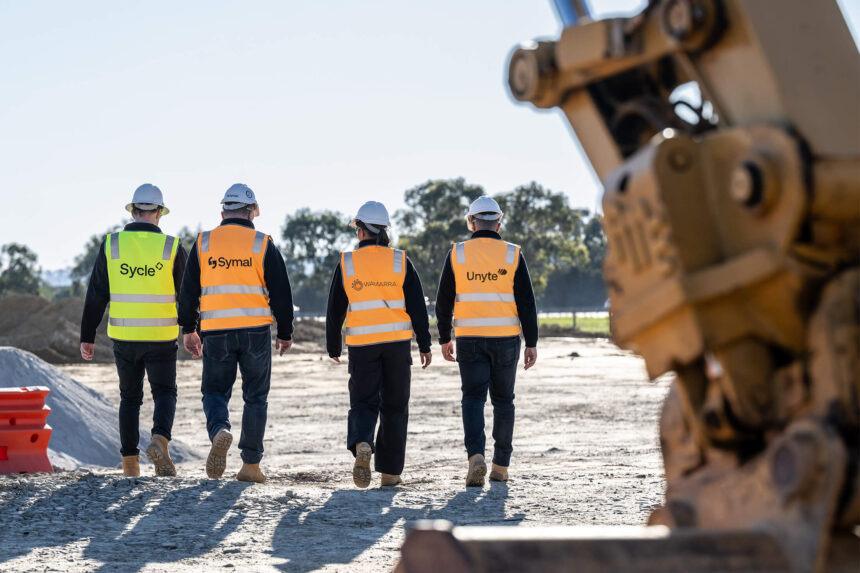
Symal has been building toward a larger national profile for some time, but FY25 marked a clear step-change. The company describes itself as a diversified services provider delivering end-to-end solutions with specialist expertise, an in-house fleet and workforce, and partnerships across critical industries. Its infrastructure arm also says Symal is one of Australia’s largest self-performing contractors, with principal-contractor capability across roads, rail, defence, justice, ports and energy.
That self-perform positioning is central to the company’s story. Symal is not presenting itself as a thin management overlay on top of subcontracted work; it is presenting itself as a business that can control more of the delivery chain, bring its own plant and labour to site, and execute major civil packages with greater direct influence over productivity and program outcomes. That matters in sectors where project complexity, safety and schedule discipline are tightly linked.
FY25 was also historic for corporate reasons. Symal’s first annual report followed its successful IPO in November 2024, which the company described as the start of a new chapter defined by disciplined growth, resilient performance and a stronger long-term platform. In its FY25 results release, Symal said it exceeded Prospectus guidance, delivering normalised EBITDA of $106.1 million and normalised NPAT of $45.7 million.
Those numbers give weight to the broader operating narrative. Symal is clearly moving beyond the profile of a fast-growing private contractor into something more institutional: a listed infrastructure and civil-services platform with enough scale to pursue landmark public works while still leaning on the execution culture that built the business in the first place. The company’s own commentary around FY25 emphasised expansion, stronger client relationships and continued investment in people and capability.
One of the strongest examples of that bigger-project ambition is the Eastern Freeway Upgrades: Burke Road to Tram Road package in Victoria. Symal said it was awarded the contract to deliver the first stage of the Eastern Freeway Upgrades in alliance with Major Road Projects Victoria, Laing O’Rourke, Arcadis and WSP. The project includes road and bridge enhancements, a new interchange connecting to the North East Link tunnels, new traffic-management technology, and Melbourne’s first dedicated busway.
That partner structure is especially telling. On projects of this scale, Symal is not simply appearing as one contractor among many; it is participating inside a sophisticated alliance model alongside major public-sector and tier-one industry players. For a company profile, names like Laing O’Rourke, Arcadis and WSP are not decorative additions — they help show the level of delivery environment Symal is now operating in.
Its justice-sector work reinforces the same point. On the Chisholm Road Prison Precinct expansion, Symal said the project was completed with John Holland and would accommodate 1,248 inmates. The project page also noted that 90% of materials were sourced locally from Australia and New Zealand, while environmental measures included wastewater reuse, reduced truck movements, recycling and solar power.
That is useful context because it shows Symal’s project mix is not limited to traditional roadworks. The business is also working on complex social-infrastructure and secure-facility projects where partner coordination, local supply chains and sustainability requirements all matter. In those settings, the ability to self-perform does not replace collaboration — it makes collaboration more effective.
The Bell to Preston Level Crossing project provides another strong proof point. Symal said the team, alongside John Holland, delivered an eco-friendly space for commuters and the community, and that the work received the inaugural Homes Victoria Excellence in Social Procurement Award at the 2023 Master Builders Victoria Excellence in Construction Awards. That kind of recognition is helpful because it frames the company not just as a contractor that can pour concrete and move earth, but as one that can contribute to broader social outcomes within public infrastructure programs.
Taken together, those projects say something important about the company’s operating model. Symal is increasingly active in environments where government clients, alliance partners, consultants and community stakeholders all need to stay aligned. That is a more demanding setting than a simple bilateral construction contract, and it helps explain why the company has been so focused on capability depth and delivery discipline.
The challenge for a business like this is not a lack of opportunity; it is managing growth without diluting performance. Large infrastructure work brings long lead times, intricate stakeholder structures and high expectations around safety, cost and program control. Symal’s public materials suggest the company understands that, which is why its messaging in FY25 focused on disciplined growth rather than scale for its own sake.
That framing feels credible because the company’s partner ecosystem is so visible. Major Road Projects Victoria, Laing O’Rourke, Arcadis, WSP and John Holland all point to a business increasingly trusted inside high-value delivery frameworks. Those relationships are a meaningful part of why Symal now reads as a much more substantial national contractor than even a few years ago.
Looking ahead, Symal appears well positioned to keep building on that trajectory. It has the capital-markets milestone of a recent IPO behind it, stronger public reporting, major alliance-backed project exposure and a self-perform model that gives it genuine operating leverage. On the evidence of FY25, Symal looks like a contractor still growing fast, but doing so on an increasingly mature foundation.