
Duratec: The Specialist Contractor Built Around Renewal, Protection and Trusted Delivery
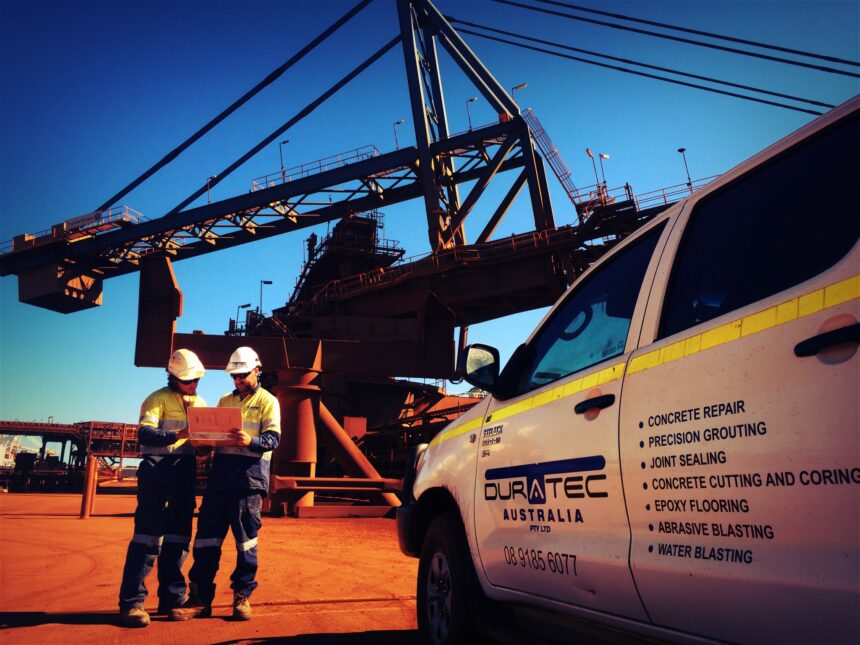
Duratec has built its market position around a part of the construction landscape that is becoming more important with every passing year: the renewal, remediation and long-term protection of critical assets. The ASX-listed company describes itself as an engineering, construction and remediation contractor specialising in the protection and remediation of steel and concrete structures, with work across defence, fuels, mining, marine, energy, building façades, transport, water and industrial infrastructure.
That focus gives Duratec a distinct identity. Rather than relying on large volumes of conventional new-build work, the company has increasingly aligned itself with projects where asset life, technical durability and upgrade capability are central to the client outcome. Its public materials consistently point to ageing infrastructure, corrosion, capacity upgrades and specialist asset protection as long-term demand drivers.
The business has also grown into a much broader national platform than a simple niche label might suggest. Duratec’s investor materials say it operates through 20 branches across Australia and has built exposure to multiple end markets, allowing it to move between defence, mining, marine, transport and emerging infrastructure sectors as conditions evolve.
That diversification showed up clearly in FY25. Duratec reported revenue of $573.0 million, while also noting that record performance in Energy and Emerging sectors helped offset delays in Defence and Mining contract awards. The picture that emerges is of a business becoming more balanced, with new streams of work reducing reliance on any single tender cycle or asset class.
One of the best examples of the company’s capabilities is the work at RAAF Base Tindal in the Northern Territory. Duratec has described the fuel infrastructure package there as a $110 million project and, at the time, its largest ever. The work sits inside one of Australia’s most strategically important Defence sites and reflects the company’s growing role in technically demanding, high-compliance infrastructure environments.
Its work at HMAS Stirling makes that story even clearer. In 2025, Duratec said the Duratec Ertech Joint Venture, its 50:50 JV with Ertech, had been awarded a $281 million contract for infrastructure upgrades on the Diamantina Wharf to support future submarine capability at Garden Island in Western Australia. That is an important detail for the profile because it shows Duratec not simply as a standalone contractor, but as a business willing to work through meaningful delivery partnerships on major defence programs.
That was not a one-off engagement at HMAS Stirling either. Duratec has also published work on the Armament Wharf Extension and the remediation of Parkes Wharf, where it said it was appointed head contractor by project delivery services provider JLL. Those references help show a deeper relationship with the base and a delivery model that often sits alongside major project managers, Defence stakeholders and specialist delivery partners.
The Parkes Wharf work is especially useful editorially because it makes the partner ecosystem visible. Duratec was not only carrying out the physical works; it was working within a broader project structure involving JLL and the Department of Defence, which reinforces the trust placed in the company on sensitive, logistically constrained assets.
Duratec’s marine and port-side credentials extend beyond Defence. In South Australia, the company has highlighted its work with Flinders Ports, including a multi-stage Inner Harbour project in Adelaide and a broader digital asset-management partnership involving MEnD. Duratec said the alliance with Flinders Ports used tools such as photogrammetry and BIM to improve inspection, maintenance and marine-infrastructure planning.
That matters because it shows another dimension of the business. Duratec is not only a contractor mobilising trades to site; it is also increasingly presenting itself as a partner in asset intelligence, lifecycle planning and smarter marine-infrastructure management. In that sense, the company’s value proposition is widening from remediation alone into broader asset stewardship.
Its strategic moves in fabrication also point in the same direction. In 2026, Duratec announced an agreement to acquire Pacific Welding Australia, describing the NSW-based business as a way to expand self-perform capability and strengthen its presence in the Hunter Region. Even though that transaction sits outside the completed-project story, it is relevant because it suggests Duratec wants greater control over specialist fabrication and welding inputs as it scales into larger packages.
The company has still had to manage timing pressures. Duratec’s FY25 materials noted delays in several high-probability project awards, particularly in Defence and Mining. But those same materials also pointed to stronger outcomes in Energy and Emerging sectors, more direct access to asset owners and a broader spread of work across transport, marine and water infrastructure.
That is probably the most constructive way to frame the challenge section. Duratec operates in markets where procurement cycles are long and contract timing can shift, yet its response has been to diversify, deepen partnerships and strengthen internal delivery capability rather than retreat.
Culture and workforce development remain part of the company’s public identity too. Duratec says it values integrity, pride, accountability, courage and recognition, and its recent materials point to a growing workforce and expanded apprenticeship and trainee pathways. That focus on capability-building matters in a specialist contractor, because technical depth and repeatability are hard to sustain without a stable people base.
What ultimately makes Duratec a strong profile is that its partners are not decorative names. Ertech, JLL, Flinders Ports, MEnD and, prospectively, Pacific Welding Australia all tell you something real about how the company works: through joint ventures, delivery alliances, long-term client relationships and deeper self-perform capability.
In a market often dominated by new-build headlines, Duratec has built momentum around a different kind of importance. It is a company increasingly trusted to help protect, renew and extend the life of infrastructure that cannot afford to fail, and its growing network of delivery partners suggests that role is only becoming more significant.