
Cedar Woods: Growing a National Development Platform Through Communities, Partnerships and Long-Term Discipline
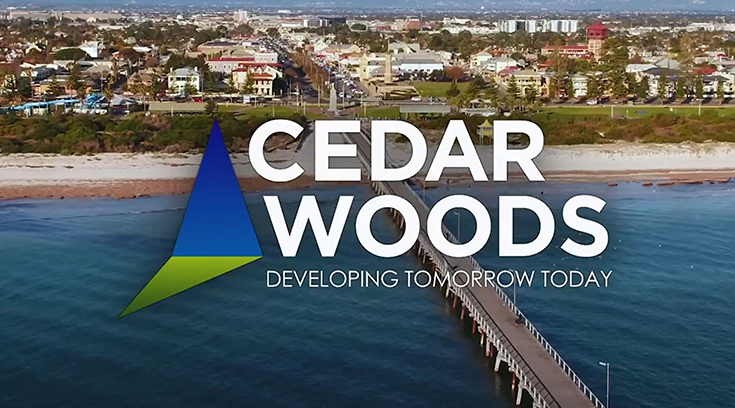
Cedar Woods has spent decades building a development business that feels deliberate in both pace and shape. The company says it is a national developer of residential communities and commercial properties, established in 1987 and listed on the ASX in 1994, with projects across Western Australia, Victoria, Queensland and South Australia.
Its broader strategy has remained remarkably consistent. Cedar Woods repeatedly describes its business as one built around disciplined acquisitions, thoughtful design and a diversified portfolio by geography, product type and price point. That framework helps explain why the company has been able to expand nationally without looking like it is chasing growth for growth’s sake.
The diversification is visible in both the portfolio and the numbers. Cedar Woods’ FY25 materials highlighted 35 projects nationwide, more than 9,400 undeveloped dwellings, lots and offices in the pipeline, and major partnering arrangements that are helping the company scale more efficiently. In the same period, it reported strong presales and profit growth, reinforcing the sense of a developer with momentum rather than just landbank.
Williams Landing remains one of the clearest expressions of that model. Cedar Woods describes it as a 275-hectare mixed-use estate in Melbourne’s west, combining homes, offices, retail, parks and transport connectivity around a large urban precinct. It is not simply a subdivision story; it is a long-duration place-making project with residential, commercial and civic elements working together.
That wider-community lens is one of the company’s strengths. The Williams Landing Town Centre has been framed by Cedar Woods as a major employment and retail destination, supported by a train station, freeway access and community infrastructure. For editorial purposes, that makes the project more meaningful than a simple lot-count milestone.
The partner story becomes more visible in Western Australia at Eglinton Village. In 2023, Cedar Woods announced that the estate would be home to Western Australia’s first community energy sharing network through a joint initiative with Zenith Energy. The project’s energy platform, branded Eve, is managed through a Zenith subsidiary and is designed to supply and manage electricity for the community.
That is exactly the kind of detail that sharpens the company’s profile. The Eglinton story is not just about selling homes in a growth corridor; it is about pairing residential development with an energy partner that can make the community more differentiated, more efficient and more future-oriented. Cedar Woods later reported that the Eglinton microgrid had been commissioned, with strong buyer uptake.
The company’s capital-partnership model has also become more important. Cedar Woods’ investor materials say it has two major partnering arrangements in place — QIC and Tokyo Gas Real Estate — and that future acquisitions will increasingly be undertaken in partnership to improve return metrics, broaden funding sources and scale the business more efficiently.
The QIC relationship gives that strategy a clear Queensland expression. Cedar Woods announced that it had entered into a joint venture with QIC Real Estate to develop land owned by QIC adjacent to Robina Town Centre in South East Queensland, with the project initially centred on about 400 apartments and townhouses. That arrangement matters because it shows Cedar Woods leveraging its residential-development capability alongside a major institutional property owner.
Its partnership with Tokyo Gas Real Estate Australia has become even more visible. Cedar Woods said Tokyo Gas acquired 49% of the Upham Street, Subiaco development, with Cedar Woods appointed to manage and sell the project. Later updates described Verde Subiaco as the fourth collaboration between the two groups nationally, while the company’s FY25 materials also pointed to multiple Tokyo Gas-linked projects underway.
That is not just a financing footnote. The Tokyo Gas partnerships suggest Cedar Woods has built a model that is increasingly attractive to long-term capital partners who want exposure to Australian residential development without having to originate and manage every project themselves. Cedar Woods brings site selection, planning, delivery and sales capability; Tokyo Gas brings patient capital and scale.
The Subiaco projects are useful examples of how those relationships feed into real developments. Cedar Woods has said Incontro is already well advanced, with strong sales momentum, while Verde Subiaco is following as a new apartment release in partnership with Tokyo Gas. A 2024 construction update on Incontro also named EMCO Building as the appointed builder, showing how Cedar Woods’ project model ultimately depends on a broader chain of capital, builder and consultant relationships to deliver.
The company has still had to navigate the same headwinds affecting much of the Australian development market. Its public materials refer to workforce and builder-capacity constraints, supply-chain pressure, long approval timeframes and elevated apartment construction costs. Those are not small issues in a national residential business.
But Cedar Woods’ response has been measured rather than reactive. Its materials point to strong presales, active project progression, balance-sheet flexibility and a continued willingness to use joint-venture structures to reduce capital intensity and spread risk. That helps frame recent challenges not as a break in the story, but as conditions the company is working through with discipline.
Culture and community remain visible as part of the brand. Cedar Woods has said it wants to create a progressive work environment, has reported strong staff satisfaction, and has continued national community initiatives alongside its development pipeline. Those softer indicators matter because the company’s public identity is built as much around community outcomes as around financial performance.
What makes Cedar Woods especially compelling now is that its partners are integral to the operating model. Zenith Energy at Eglinton, QIC at Robina, Tokyo Gas Real Estate Australia in Subiaco and other apartment projects, and builders such as EMCO Building are all part of how the company is scaling its portfolio and differentiating specific communities.
Cedar Woods today looks like a developer that has expanded without losing its centre. It is still grounded in disciplined acquisitions and diversified communities, but its newer partnerships show a business that is becoming more sophisticated in how it funds, structures and delivers growth. That is a strong place to be in a housing market that increasingly rewards patience, quality and well-chosen collaborators.