


Immutable: From Sydney Startup to Global Web3 Gaming Infrastructure Company
Immutable is one of the more polarising names in Australian tech because it sits at the intersection of gaming, crypto infrastructure and digital ownership. Yet regardless of where one sits on the broader web3 debate, the company has clearly become one of Australia’s most visible and heavily backed startup exports in that space. Its own materials describe it as a global leader in gaming on a mission to bring digital ownership to every player, with products spanning user identity, engagement, audience growth and monetisation infrastructure for games.
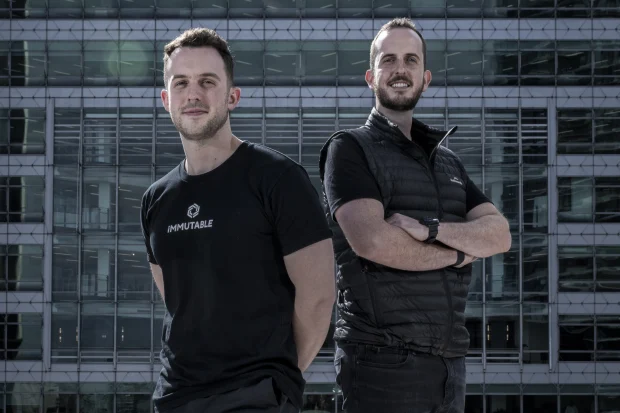
The founder trio is a large part of why the company feels distinct. Immutable’s own company-news boilerplate says it was co-founded in 2018 by James Ferguson, Robbie Ferguson and Alex Connolly in Sydney. Unlike some startup stories that revolve around serial founders with prior exits, Immutable’s public positioning is built more around its internal origin in blockchain gaming and the founders’ decision to turn that niche into a much larger infrastructure ambition. That gives the company a more focused, product-native story than a lot of crypto-era ventures managed to develop.
The defining financing event was its US$200 million Series C in 2022, which valued the business at US$2.5 billion and brought in heavyweight investors including Temasek. That round cemented Immutable as one of the most heavily funded Australian-founded private tech companies in the web3 and gaming segment. It also marked a transition point: the company was no longer simply a startup attached to one or two gaming experiments, but an infrastructure business trying to position itself as the operating system for blockchain-enabled game growth.
That broader positioning is much more visible on the product side today. Immutable’s homepage now talks less like a pure blockchain company and more like a game-growth platform, with modules for Passport, Checkout, Chain, Audience Growth, Asset Contracts, Indexer and more. That product breadth is important because it suggests the company has been trying to translate web3 complexity into something game developers can adopt more practically. It is a notable evolution from early NFT-marketplace narratives toward something that looks more like full-stack game infrastructure.
The partner ecosystem is a big reason that shift feels credible. Immutable’s earlier press and blog materials highlight the strategic partnership with GameStop, including a co-fund to support high-impact NFT gaming projects and later integrations with the GameStop wallet and marketplace. While the broader NFT market has cooled since those headlines first landed, the significance of those partnerships remains: they showed that the company could secure globally visible commercial relationships around its core infrastructure.
The company has also continued building out the gaming ecosystem around itself. Public Immutable content points to partnerships with YGG, MARBLEX, Magic, and a growing base of games and player-signup activity. More recent company claims include millions of signups, rapidly growing on-chain activity and hundreds of games in the ecosystem. Even allowing for the noisiness of web3 metrics, the broad pattern is clear: Immutable is trying to be the centre of gravity for a large developer and player network rather than the creator of one flagship title alone.
The founder voice has also remained visible. Robbie Ferguson, in particular, is repeatedly quoted in company materials articulating the bet that web3 gaming can onboard the next generation of players if the infrastructure is good enough, the friction is low enough, and the user experience does not require mainstream gamers to care about blockchain terminology. That is a meaningful strategic shift. It suggests the founders have learned that success in this category depends less on evangelising crypto and more on quietly improving the economics and retention dynamics of games.
The challenge, of course, is obvious: Immutable operates in one of the most volatile and credibility-sensitive parts of tech. Web3 gaming has seen hype cycles, funding booms, regulatory uncertainty and shifting player sentiment. But that volatility is also what makes Immutable interesting as a startup case study. Unlike many crypto-era companies, it has tried to evolve from a market-timing story into an infrastructure and distribution story. Whether one is convinced by the category or not, that strategic repositioning is real.