

Civmec: Building Scale Across Heavy Engineering, Defence and National Project Delivery
Civmec has grown into one of the more substantial project-delivery names in Australian heavy engineering and construction. The company operates across resources, energy, infrastructure, marine and defence, with capabilities spanning heavy engineering, shipbuilding, modularisation, structural, mechanical and piping, electrical and instrumentation, precast concrete, refractory, maintenance and access solutions. In practical terms, Civmec has built a model around doing more of the work in-house than many peers, then using that self-perform capability to pursue larger and more complex packages.
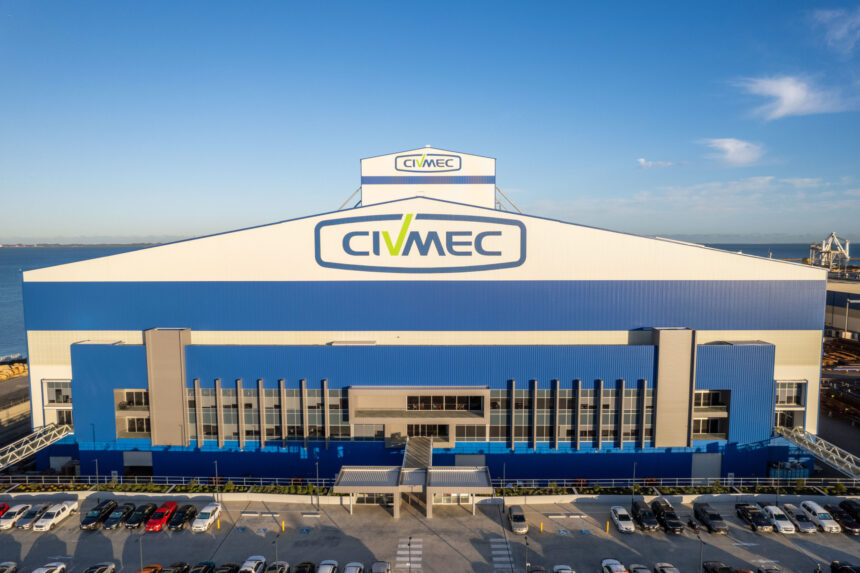
Its asset base helps explain why the business feels increasingly important. Civmec says it has strategically located facilities across Australia, anchored by major waterfront operations in Henderson and Newcastle, alongside facilities in Gladstone and Port Hedland. The Henderson site, located within the Australian Marine Complex, is described by the company as the largest heavy engineering facility of its kind in Australia.
That operating platform has supported meaningful scale. In its detailed interim accounts for the half year ended 31 December 2024, Civmec reported revenue of $502.9 million, up from $492.3 million in the prior corresponding period, and net profit for the period of $29.4 million. The same accounts showed cash and cash equivalents of $37.0 million and property, plant and equipment of about $531.6 million, reinforcing the capital intensity behind the model.
More recently, Civmec’s site also pointed to further momentum into 2026. Its news and investor pages highlighted that the company delivered 1H FY26 EBITDA of A$46 million and strengthened its order book to A$1.35 billion, suggesting the business has continued to convert its facilities and engineering depth into ongoing work across sectors.
One of the clearest reasons Civmec stands out is the way it links manufacturing capability to project delivery. In a 2025 investor presentation, the company said it was the only Australian company with a complete in-house balanced-machines offering, from design and engineering through to manufacturing, construction, maintenance and spares management. That capability was tied to projects such as a new shiploader for Port Waratah Coal Services, plus machines for Alcoa, BHP and Dalrymple Bay.
The Port Waratah contract is a good example of the model in action. Civmec said it was awarded a comprehensive contract for the design, fabrication, preassembly, shipping and installation of a new shiploader at the Kooragang Terminal, with engineering led by its Perth-based balanced-machines team and manufacturing and preassembly undertaken at Henderson. The company said the project would create more than 100 specialised jobs.
Resource-sector work remains just as important. Civmec’s project pages and announcements point to long-running relationships with Rio Tinto, BHP, Roy Hill, Alcoa and Iluka. That continuity matters because it suggests Civmec is not simply winning isolated packages; it is becoming embedded within major client capital and maintenance programs.
The client and partner map around those projects is especially useful from an editorial standpoint. In one contract update, Civmec said it had secured run-of-mine packages for long-term client Roy Hill, an overland conveyor package from Alcoa, and an energy contract with Woodside that was being managed by Worley for the Pluto LNG project. CEO Pat Tallon said at the time that Civmec was pleased to work with long-term partners Roy Hill, Alcoa, Worley and Woodside again.
Its Brockman 4 Fuel Hub work for Rio Tinto shows the same blend of on-site and off-site capability. Civmec said the project involved civil, SMP and electrical works in the Pilbara, with fabrication and pre-assembly completed at Henderson before transport to site. That kind of integrated delivery is a recurring theme across the company’s portfolio.
Civmec’s defence position has also strengthened materially. In October 2024, the company announced a Heads of Agreement with NVL B.V. & Co. KG, better known as Naval Vessels Lürssen, outlining the framework for the transfer of ownership of Luerssen Australia to Civmec. By July 2025, Civmec said the acquisition had been completed, with Luerssen Australia to be renamed Civmec Defence Industries and the SEA1180 Offshore Patrol Vessel program added to the order book.
That transaction matters for more than the headline alone. Civmec said the transfer included the assets, employees and licences of Luerssen Australia and would ensure uninterrupted design and construction of the Arafura-class offshore patrol vessels at Osborne South in South Australia and Civmec’s Henderson facility in Western Australia. In a 2025 investor presentation, Civmec also said it continued to support the OPV program through a service-level agreement with Luerssen Australia while implementing program efficiencies ahead of ownership transfer.
The company is also looking beyond the current shipbuilding program. Civmec’s May 2025 presentation said it had an MoU with Austal to form a joint venture for LAND8710 Phase 2 (Heavy), and it pointed to large future opportunities around landing craft, frigates and optionally crewed surface vessels at Henderson. That combination of existing defence work and future-positioning is a strong part of the company’s profile.
There is no shortage of complexity in a business like this. Civmec’s operations are tied to large, capital-intensive projects, long tender cycles, major-facility utilisation and the ups and downs of client spending in resources, infrastructure and defence. Even so, the company’s commentary has consistently framed those conditions as manageable within a diversified order book and a broad national capability set.
That resilience has been strengthened by diversification. In recent years, Civmec has pushed further into maintenance and capital works, balanced machines, marine and shipbuilding, rather than relying solely on major construction packages. Its inclusion on BHP’s Western Australian iron ore site engineering panel and its construction-services agreements across blue-chip clients suggest that the company is working to deepen recurring pathways to work as well as chase marquee project awards.
The business also continues to invest in its workforce and sovereign capability credentials. Civmec’s site highlights its graduate and veterans’ programs, registered training organisation and broader people-development pathways, while its recent defence commentary stresses in-house design capability and local industrial capacity. Those themes are central to how the company presents its long-term value to clients and government alike.
What makes Civmec particularly strong as a profile is that the partner ecosystem around it is unusually visible. Luerssen, Austal, Woodside, Worley, Port Waratah, BHP, Rio Tinto, Roy Hill, Alcoa and Iluka are not peripheral names — they are part of the company’s working reality and help explain the trust it has built in technically demanding environments.
Civmec now looks like a business that has moved beyond being simply a capable contractor. It is increasingly a national engineering and manufacturing platform, with meaningful exposure to sovereign shipbuilding, public infrastructure and industrial delivery. On the evidence of its facilities, client base and recent strategic moves, it appears well placed to remain part of some of Australia’s most important project pipelines in the years ahead.