

XRF Scientific: Building a Higher-Value Laboratory Technology Business Through Acquisitions, Distribution and Recurring Demand
XRF Scientific sits in a niche corner of Australian manufacturing, but it is a niche with real industrial importance. The Perth-based ASX-listed company says it manufactures equipment and chemicals used in the preparation of samples for XRF and ICP analysis, with products distributed to production mines, construction material companies and commercial analytical laboratories in Australia and overseas. On its technology pages, the company positions itself as a specialist in sample-preparation solutions rather than a generic lab-equipment supplier.
That specialisation is what gives the company its shape. XRF operates across consumables, precious metals and capital equipment, serving customers that rely on high-quality sample preparation for accurate testing in mining, industrial production and research. The business model is attractive because it blends capital-equipment sales with repeat demand for consumables and platinum recycling, creating a more recurring revenue profile than a pure one-off machinery business.
FY25 was another strong year on that front. XRF reported total revenue and other income of $59.5 million, net profit after tax of $10.3 million and net profit attributable to members of $10.4 million, with earnings per share up 15%. The annual report described FY25 as a record full-year result and noted that the June quarter included a record quarterly profit before tax of $4.3 million.
What is notable is that the profit improvement came even though revenue was slightly lower year on year. XRF said the result reflected strong consumables and Orbis crusher sales, growth in international sales, a continuing focus on cost control and productivity improvements, and reduced lithium raw-chemical prices that helped the Consumables division. That combination suggests a business getting more leverage out of its installed base and product mix rather than chasing growth at any cost.
The consumables segment remains a particularly strong foundation. In FY25, XRF said the division generated record profit before tax of $7.2 million from revenue of $19.3 million, supported by record product volumes and international sales growth in developing markets. Because these products are consumed in ongoing sample-testing processes, especially in mining production and exploration, they provide the group with a more repeatable earnings stream.
The partner and distribution lens becomes more visible in capital equipment. XRF’s annual report says its xrTGA machine is gaining market acceptance through additional high-quality reference sites, while the business continues to drive sales through a global distributor network. It also says the Orbis Mining business increased market share against competitors because of the reputation of its crushers, with sales expected to benefit further from a new distributor in the Americas.
That new distributor is named in the FY25 annual report as STG Mining Supplies. XRF said STG, which has offices across six countries in the Americas and significant experience distributing laboratory jaw crushers, became the leading external distributor of Orbis products globally within a short period of appointment. For a company like XRF, that sort of distribution relationship is highly material because it can accelerate penetration into mining-heavy markets without requiring a large fixed-cost sales expansion.
Orbis itself is now a larger part of the group. XRF exercised its call option to acquire the remaining 50% of Orbis Mining in July 2024, and the annual report says the business contributed $7.0 million of revenue and $2.4 million of net profit before tax to the group for the year. It also noted that Orbis sales were driven by customers in Australia, the United States and Canada, predominantly in the gold sector.
That acquisition looks strategically coherent. Orbis strengthens XRF’s capital-equipment offering in laboratory crushers, complements the consumables and fusion side of the business, and gives the group a more complete sample-preparation toolkit to cross-sell into mining and laboratory accounts. XRF’s annual report explicitly says its cross-selling strategy continues to be successful, with customers increasingly purchasing multiple products across the range.
The second acquisition in FY25 was Labfit Pty Ltd, completed in December 2024. XRF says Labfit manufactures carbon sulphur analysers, pH analysers and laboratory weighing systems, and that the deal expands the group’s product portfolio into existing markets such as gold mining, copper mining and industrial production. Labfit contributed revenue of $536,000 and profit before tax of $91,000 during the post-acquisition period in FY25.
That transaction is important because it adds a new analytical-product leg to the business rather than merely deepening an existing one. XRF said the goodwill in the acquisition was attributable to Labfit’s strong position and profitability in the laboratory products market, as well as expected synergies. In a business built around specialist sample-preparation workflows, that kind of adjacent expansion can make the overall platform harder for customers to replace.
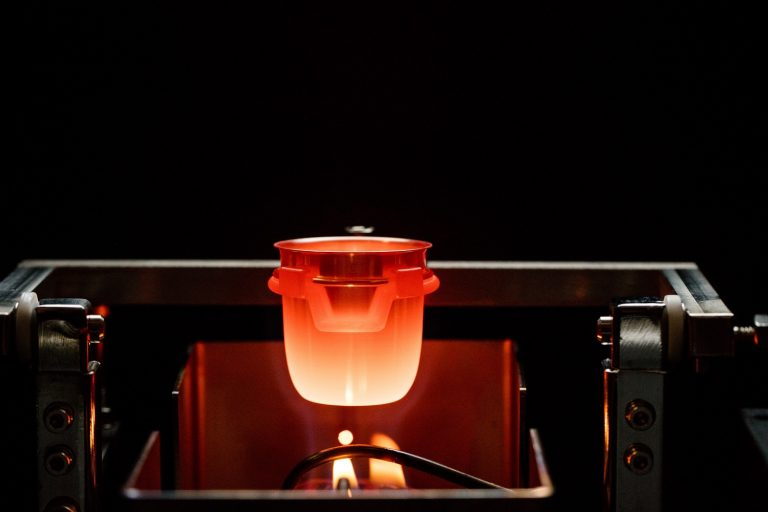
The company’s technology base reinforces that platform logic. XRF’s product and technology pages say it provides fusion equipment, borate fluxes, platinum labware and custom solutions for XRF and ICP analysis, and emphasises the ability to help customers design sample-preparation processes tailored to exact sample types. That is a useful reminder that XRF is not just selling catalogue items; it is selling analytical reliability and workflow expertise into exacting environments.
The main challenge in FY25 was not demand so much as managing growth across a broader group structure. Revenue dipped slightly, and XRF committed capital to both the Orbis and Labfit transactions, with cash outflows for acquisitions contributing to higher investing and financing outflows. But the broader indicators remained healthy: operating cash inflow rose to $10.1 million, cash stood at $12.2 million, debt was modest, and the board lifted the final fully franked dividend to 4.5 cents per share.
What stands out is that management used a year of strong mining-driven activity not only to defend margins, but to strengthen the business architecture. The acquisitions of Orbis and Labfit, the expansion of the global distributor network, and the growing installed base of equipment all suggest a company building for depth rather than short-term volume alone.
That is why XRF feels larger than its market capitalisation might imply. It is a specialist manufacturing and technology business with recurring consumables demand, proprietary equipment, precious-metals capability, distributor leverage and a clear customer base in mining and industrial analysis. Those are attractive characteristics in a manufacturer operating inside a high-value technical niche.
Its partner ecosystem is also unusually tangible. Orbis Mining, STG Mining Supplies, Labfit and the broader global distributor network are not peripheral references; they are part of how the company is extending product range, improving cross-selling and scaling internationally. For a manufacturing profile, those relationships are exactly the sort of proof points that make the growth story more concrete.
Looking ahead, XRF appears well positioned if mining activity remains healthy and the group keeps executing on integration and distribution. Its installed base is expanding, the consumables engine is strong, and the product platform is broader than it was a year ago. On the evidence of FY25, XRF is steadily building a more complete and more resilient laboratory technology business.