

29Metals: Rebuilding Operational Momentum Around Copper, Asset Quality and Near-Mine Growth
29Metals has a straightforward strategic identity: it is a copper-focused mining company with exposure to metals tied closely to electrification and the energy transition. The company says it explores for, develops and produces base and precious metals through a portfolio anchored by Golden Grove in Western Australia and Capricorn Copper in Queensland, with additional exploration interests around both operations and a strategic foothold in Chile through Redhill.
That portfolio gives the business both operating depth and optionality. Golden Grove remains the company’s producing cornerstone, Capricorn Copper remains a high-grade copper-and-silver asset despite its suspended status, and Redhill provides longer-dated exploration exposure in the world’s largest copper-producing nation. This is not a single-mine story; it is a company trying to reset around a stronger mix of producing assets and organic growth pathways.
The 2025 financial results showed why that reset matters. In February 2026, 29Metals reported group EBITDA of $176 million and NPAT of $24 million for the year ended 31 December 2025, with drawn debt reduced by $74 million to $188 million and total revenue rising to $566.6 million. The company noted that both EBITDA and NPAT included $54 million of insurance proceeds, but the overall result still reflected a much stronger operational footing than the year before.
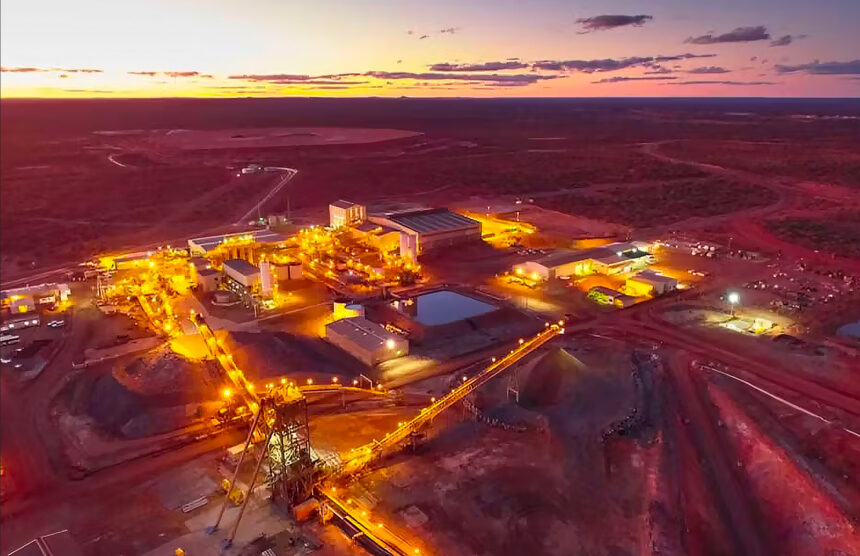
Golden Grove is central to that improved footing. The company describes it as a world-class VHMS geological system with a 2024 mining rate of 1.47 Mtpa, mine life of more than 10 years and ore reserves of 16.5 Mt as at 31 December 2024. Its history stretches back to the 1971 discovery of the district by an unincorporated joint venture between Aztec Mining and AMAX Mining Limited, with underground mining commencing in 1989 and subsequent expansion through Scuddles and Gossan Hill.
That legacy matters because Golden Grove is more than just a current producer. It is also the operating hub for 29Metals’ next wave of organic growth. The Gossan Valley project, located around seven kilometres south of the producing Gossan Hill mine, reached final investment decision in December 2024 and is intended to provide a third mining front to support production growth. The asset page says the project carries an initial mine life of around six years and mining rates of up to 585 ktpa based on feasibility studies.
That is a meaningful strategic step because it shows the company trying to build from existing infrastructure rather than rely only on greenfield ambition. Gossan Valley is being developed close to an operating asset, with feasibility work maturing deposits such as Gossan Valley, Conteville, Felix and Grassi into a near-mine expansion pathway. For a copper producer, that kind of brownfields growth can often be more valuable than distant optionality.
Capricorn Copper adds both challenge and long-term upside to the profile. The asset remains a high-grade underground copper and silver operation with multiple ore sources and a potential mine life of more than 10 years, but the company currently lists production there as suspended. Even so, 29Metals’ own materials continue to frame Capricorn as an important part of the future portfolio, supported by productivity-improvement plans, multiple ore sources and further in-mine and near-mine opportunities.
That combination of strength and interruption is important to the story because it explains why the company’s recent narrative is less about simple production growth and more about disciplined value recovery. Capricorn is not being written off; it is being positioned as an asset that still holds strategic relevance once the right conditions for a successful and sustainable restart are in place.
There is also a corporate-partner layer to how 29Metals came together. The company’s history page notes that EMR Capital acquired Golden Grove in 2017, and leadership biographies on the 29Metals site still reference senior executives with prior EMR involvement. That is useful context because it shows the company’s roots in specialist mining-investment stewardship rather than in a conventional conglomerate buildout.
29Metals’ partner story is less about named builders or engineering consultants and more about long-cycle stakeholder alignment. The company’s sustainability pages emphasise long-term relationships with communities, workforce groups and regulators around its operating sites, while the business model itself is explicitly tied to selling concentrates to commodity trading firms or smelters for refining and on-sale into end markets. In mining, those downstream and stakeholder relationships are a critical part of how value is ultimately realised.
The company is also keeping a longer horizon in view through exploration. Beyond Golden Grove and Capricorn, 29Metals’ asset pages point to the Cervantes opportunity near Golden Grove and the Redhill-Cutters Cove package in Chile, which the company frames as exposure to a historically under-explored copper region. These projects help make the company’s future look broader than a two-asset recovery story.
What makes 29Metals a compelling feature is that the business now reads as a copper producer with real second-phase substance. It has one operating cornerstone in Golden Grove, one suspended but still material asset in Capricorn Copper, approved brownfields expansion in Gossan Valley, and a more stable financial picture after the 2025 result. For a company operating in a metal set that sits squarely inside the electrification theme, that is a meaningful combination.