
Melanie Perkins: Building Canva from a Classroom Frustration into One of Australia’s Most Influential Technology Companies
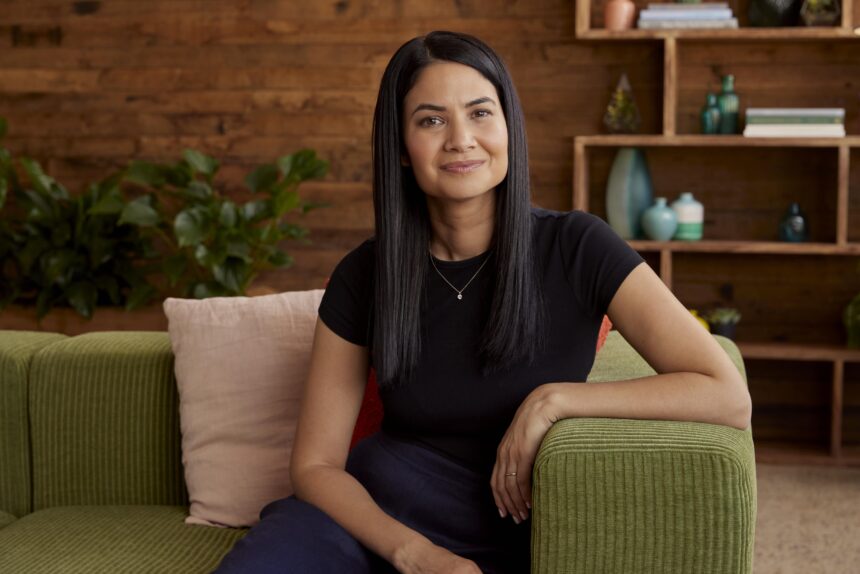
Melanie Perkins is still best understood not simply as the co-founder of Canva, but as the executive who has stayed close enough to the company’s original mission to keep reshaping it as it scales. Canva’s own leadership page identifies her as Co-Founder and CEO, and the company’s recent updates show that she remains publicly associated with its biggest strategic moves, from major product launches to its next era of AI and enterprise expansion. That matters because many founder stories become less compelling once the founder is no longer central to the operating story. Perkins’ profile is different: the company’s direction is still unmistakably hers.
Under her leadership, Canva has moved well beyond the “easy graphic design tool” label that first made it famous. In Canva’s 2025 year-in-review post, the company said it had grown to 260 million monthly users and $3.5 billion in revenue, while also noting that Canva was now used by 95% of the Fortune 500. Those numbers tell only part of the story, but they are useful markers of just how far the business has stretched from its original core. Canva is no longer only for students, social teams and small creators; under Perkins, it has become a platform that now sits inside classrooms, startups, nonprofits and some of the world’s largest organisations at once.
A large part of that current impact comes from the way Perkins has kept broadening the company’s ambition without abandoning the original mission of accessibility. The big recent example is Visual Suite 2.0, which Canva described in 2025 as one of its largest launches ever, designed to bridge productivity and creativity more tightly inside one platform. In 2026, the company pushed further with Canva AI 2.0, which it framed as its most significant product evolution since launch, turning Canva into a more conversational and agentic creation environment. What is notable here is not just product velocity, but the consistency of the strategic direction: under Perkins, Canva keeps trying to reduce the friction between an idea and a finished piece of work.
Perkins’ current chapter is also defined by the way she has expanded Canva upmarket without letting it lose its broader mass-market identity. In 2024, Canva acquired Affinity, a move the company said would help it support professional creatives with more advanced tools. The next year, Canva formally relaunched Affinity and later explained that it had the financial strength to make it free because Canva itself had become a profitable, rapidly growing business with 28 million paying customers and $3.5 billion in annualized revenue. This is one of the most strategically interesting parts of Perkins’ leadership: she has managed to grow Canva from a tool that once disrupted the low end of the design market into a company now reaching further into professional creative workflows as well.
That same expansion logic is visible in Canva’s adjacent acquisitions. In 2024, the company acquired Leonardo.Ai, saying the deal would strengthen its visual-AI capabilities and bring a team of around 120 researchers, engineers and designers into the business. Then in 2026, Canva announced the acquisitions of Simtheory and Ortto, describing them as ways to add agentic AI and customer-data-driven marketing automation into the platform. Seen together, those moves say something important about Perkins as a leader: she is not only growing Canva through organic product rollout, but through carefully chosen acquisitions that widen the platform from design into AI, workflow and marketing operations. Under her leadership, Canva has become less a single product and more an expanding creative operating environment.
What makes that current success more impressive is how clearly it links back to Perkins’ earliest business instincts. Before Canva, she co-founded Fusion Books with Cliff Obrecht, applying a simple drag-and-drop design approach to school yearbooks. In an interview reflecting on that period, Perkins said Fusion Books became the largest yearbook company in Australia and expanded into France and New Zealand. That earlier venture is important not because it was enormous, but because it gave her a real proving ground for the core Canva idea: take something that is technically difficult, visually intimidating and far too slow, then redesign it so ordinary people can do it themselves. That instinct — simplify the hard thing without making it feel cheap — still sits at the centre of Canva.
The transition from Fusion Books to Canva also reveals something essential about Perkins’ style as a company-builder. Canva’s own historical materials say the company launched in 2013, but only after a long period of pitching, team-building and investor persuasion. Official Canva newsroom pieces explain that Bill Tai and Lars Rasmussen encouraged Perkins and Cliff Obrecht to find a technical co-founder, which eventually led to Cameron Adams joining as the third co-founder. Canva’s 2013 seed-round announcement later named backers including Matrix Partners, InterWest Partners, 500 Startups, Bill Tai, Lars Rasmussen, Ken Goldman and Paul Bassat. This part of the story matters because it shows Perkins doing one of the hardest things in startup building: taking an initially simple product insight and slowly constructing the team, capital base and technical credibility to support a much larger version of it.
There is a common temptation to describe leaders like Perkins purely through valuation and wealth, but that misses what is most interesting about her career. The more useful leadership lens is that she has kept thinking in systems. Fusion Books was not just a yearbook company; it was a test case for design simplification. Canva was not just a design app; it was a platform for democratising visual communication. The newer Canva is not just a template library with AI add-ons; it is trying to become what the company itself now calls a Creative Operating System, where design, productivity, data, branding and increasingly AI-assisted execution all meet in one place. That kind of strategic continuity across multiple company stages is rare, and it is one of the reasons Perkins makes such a strong “Leaders in Industry” subject.
Her leadership style also appears to be unusually mission-retentive for a founder who now runs a very large private company. Canva’s own language still returns constantly to “empowering the world to design,” and Perkins’ byline pieces continue to frame new launches as extensions of that mission rather than departures from it. Even the Affinity decision was explained not simply as a business move, but as part of Canva’s broader effort to widen access to professional-grade creative tools. Whether one views that language as idealistic or strategic, the consistency is real. Perkins has managed to grow the company dramatically without allowing the public narrative to become detached from the original reason it existed.
That does not mean the road has been linear or easy. The company’s own historical and retrospective materials reference repeated investor knockbacks in its early days, a long journey to building the right founding team, and the challenge of turning an apparently simple idea into a product robust enough for global scale. The reason those details are worth mentioning is that they change the profile from a polished success story into a more useful leadership case study. Perkins did not arrive at Canva after a sequence of major exits or a conventional Silicon Valley founder apprenticeship. She built her way into the role by spotting a genuine user problem, testing it in a niche market, then showing enough persistence and clarity to keep widening the thesis until the rest of the market caught up.
At this point in her career, Perkins is no longer interesting only because she helped create one of Australia’s most valuable private companies. She is interesting because she has remained the executive face of its most important reinventions. The Canva of 2013, the Canva of mass adoption, the Canva of enterprise growth, and the Canva now integrating AI, professional design tools and marketing automation are all recognisably parts of the same company. That coherence is one of her biggest achievements in the current role. Plenty of founders build breakout products; fewer can keep redesigning the company around the same mission as it becomes larger, more complex and more globally significant. Perkins has done exactly that.