
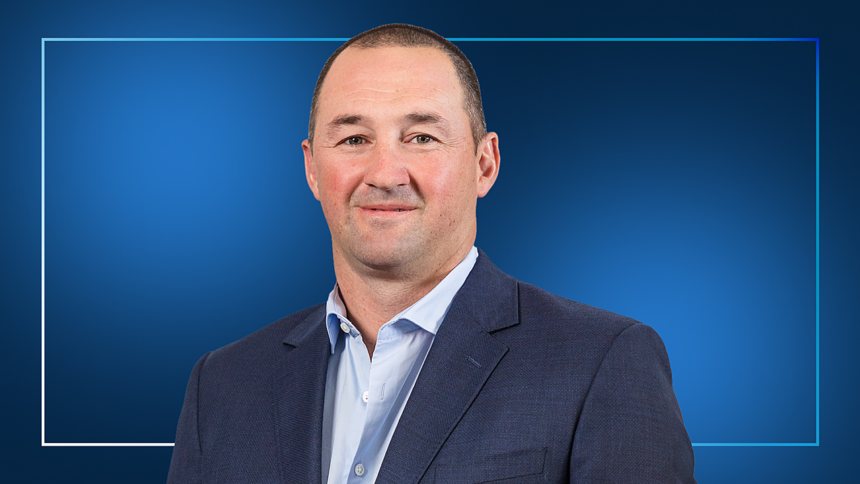
Wes Maas: Building a One-Machine Start-Up into a Diversified Australian Infrastructure Platform
Wes Maas is best understood as one of the more direct examples of founder-led industrial expansion in modern Australian business. Maas Group Holdings’ investor materials identify him as the company’s founder, Managing Director and Chief Executive Officer, and the company still frames its history around a strikingly simple origin point: in 2002, Maas started the business in Dubbo with one Bobcat and a tipper truck. Today, that same business has become a diversified industrial group spanning construction materials, civil construction and hire, manufacturing and real estate, with operations across Australia and an expanding international presence.
That contrast — from one machine to a listed industrial platform — is the central achievement of Maas’ current role. Under his leadership, Maas Group has not been built as a narrow contractor or single-segment supplier. It has become a portfolio-style operating business, with activities connected to regional development, infrastructure, quarrying, equipment hire, manufacturing and residential land. That breadth matters because it shows Maas’ instinct as a founder: he has consistently looked for adjacent profit pools around the physical economy, then tried to bring them into a structure that can compound over time.
The company’s recent performance gives that strategy a clear financial shape. In FY25, Maas reported record underlying EBITDA of $219.4 million, up 6% on the prior year, and its FY25 presentation described that result as representing a 28% compound annual growth rate in underlying EBITDA since listing. In the first half of FY26, the company then reported underlying revenue of $607.7 million, up 33%, and underlying EBITDA of $115.3 million, up 21%, while upgrading FY26 underlying EBITDA guidance to a range of $250 million to $280 million.
A major part of Maas’ current leadership story is not only growth, but capital recycling. In February 2026, Maas announced the proposed sale of its Construction Materials division to Heidelberg Materials Australia for gross proceeds of up to $1.703 billion, including $120 million of contingent consideration. The transaction covers quarry, concrete, asphalt and recycling assets, with completion expected in the second half of calendar 2026, subject to conditions. For a founder who built a large construction materials platform from regional roots, the proposed sale is a defining outcome: it shows Maas not only assembling assets, but being prepared to realise value when a global strategic buyer can take them further.
What makes that transaction especially important is the way it reframes Maas Group’s next chapter. A founder-led company can sometimes become emotionally attached to the asset base that made it successful. Maas appears to have taken the opposite approach. By selling a division that had become a major contributor to group earnings, he is signalling that the company’s real capability is not any one set of quarries or plants, but the ability to identify, build, operate and recycle infrastructure-facing businesses. That is a more sophisticated version of the entrepreneurial instinct that created the company in the first place.
The company’s listing was another important moment in Maas’ career. Maas Group completed a $145.6 million IPO on the ASX in December 2020, with an implied market capitalisation of $529.9 million at the offer price. Wes Maas remained the largest shareholder after listing, which made the IPO less a founder exit than a capital-market platform for further expansion.
That public listing changed the scale of what Maas could build. Before the IPO, the company’s growth had already been substantial, but listing gave it access to equity capital, a public acquisition currency and a more formal investor base. Since then, the company has continued to use acquisitions, organic investment and capital recycling to expand its reach. The proposed Heidelberg transaction is therefore not an isolated deal; it fits a broader pattern in Maas’ career of treating ownership as dynamic rather than static.
There is also a regional-business dimension to Maas’ leadership that makes him distinctive. The company remains headquartered in Dubbo, and its public materials still emphasise its regional origins. That is not a cosmetic detail. Many Australian industrial companies are built around metropolitan head offices and national networks. Maas’ story reverses that logic. He built from regional New South Wales outward, using local operating knowledge, equipment discipline and relationships in civil construction to move into larger infrastructure and materials markets.
The early years of the company are important because they explain the operating culture that still appears to define it. Starting with a Bobcat and tipper truck is not just a colourful anecdote; it implies a founder who began close to the work, not above it. That practical grounding matters in the kinds of sectors Maas Group operates in. Civil construction, quarrying, plant hire and real estate development all reward an ability to price risk, manage equipment utilisation, control working capital and understand local demand. Maas’ leadership has been built around those operating realities rather than abstract strategy.
The company’s more recent numbers suggest that this practical approach has translated into institutional performance. In its first half FY26 results, Maas highlighted 100% cashflow conversion, underlying NPAT growth of 26%, and strong contributions from civil construction and hire, construction materials and residential real estate. Those details matter because they show a business not only growing revenue, but converting activity into cash while still investing in new areas.