
City of Greater Geelong: Driving Regional Scale Through Partnerships, Precinct Projects and Economic Ambition
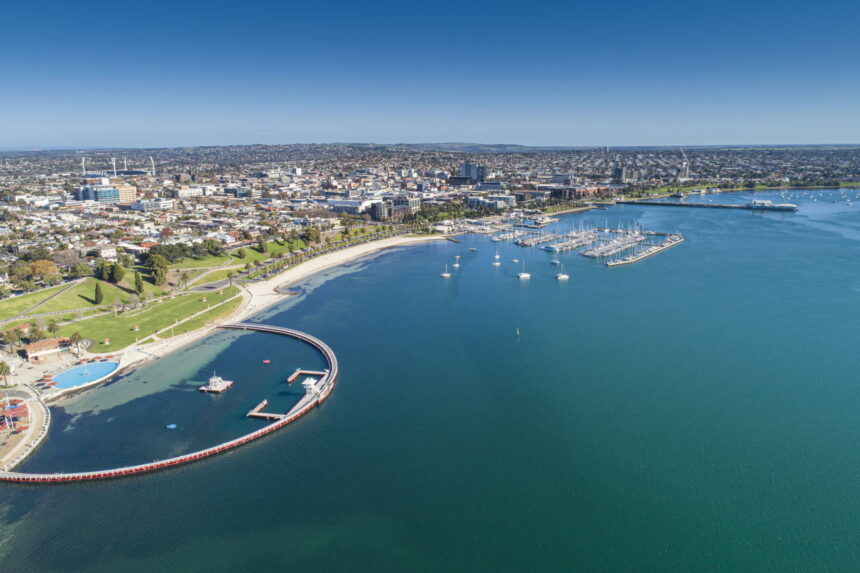
The City of Greater Geelong increasingly positions itself as a regional city with national ambition, and its most recent reporting supports that framing. The 2024–25 annual report describes Greater Geelong as Victoria’s second-largest city, while the city’s economic-development agenda — reflected through Geelong on the Rise and the wider clever-and-creative framework — aims to generate 55,000 new jobs and lift regional economic output materially over the coming decade. This is important context because it shows Geelong working from a scale and level of ambition that goes well beyond the typical image of a regional council.
One of the clearest expressions of that ambition is the Geelong City Deal. The City Deal, backed by the Australian Government, Victorian Government and the City of Greater Geelong, is described by the council as a 10-year plan supported by $370 million in government investment. Its purpose is not merely to fund isolated projects, but to help reshape the city through economic diversification, improved visitor appeal, transport and public-space upgrades, and stronger investment confidence in central Geelong and the wider region. That three-tier funding and governance model is itself a signal of how important Geelong has become in the Victorian and national urban landscape.
The Northern Aquatic and Community Hub, now Norlane ARC, is one of the best examples of that partnership-led model on the ground. City updates identified Kane Constructions as builder and said the project benefited from support from both the Australian and Victorian Governments. When the facility opened, the city described it as a major health and recreation hub for Geelong’s northern suburbs, with local and state representatives explicitly framing it as a world-class community asset. That matters because it shows how Geelong is using multi-level public investment not just for CBD prestige projects, but for social infrastructure in growth and disadvantage-affected communities as well.
The city’s wider partnership network is unusually visible. Geelong’s “Our Partners” page lists organisations such as Deakin University, Barwon Health, Committee for Geelong, G21 Geelong Region Alliance, Avalon Airport, Geelong Chamber of Commerce and The Gordon as part of the ecosystem supporting its clever-and-creative agenda. That is a strong signal of how the city is trying to build momentum: not simply through council action alone, but through institutional alignment across education, health, advocacy, transport and business. For a municipal government feature, that gives Geelong more structural depth than many peers.
International engagement is also becoming a more visible part of the growth story. In August 2025, the City signed a Memorandum of Understanding with the Australia India Business Council (AIBC) to strengthen bilateral trade and investment links between the Geelong region and India. Later council materials connected that deal to the broader International Engagement Strategy and to subsequent business forums. This is a particularly useful detail because it shows Geelong thinking not only about internal growth drivers, but about how to connect the region’s capabilities — in manufacturing, education, health, technology and tourism — to external markets and relationships.
Culture also remains part of the city’s broader proposition. Council’s arts material describes Geelong Arts Centre as a major regional arts provider, and the annual-report summary highlighted the global attention drawn by the corpse-plant bloom at the Geelong Botanic Gardens in late 2024, which attracted more than 20,000 visitors and generated significant online engagement. Those kinds of details are worth noting because they help round out the profile: Geelong is not positioning itself only as a jobs-and-infrastructure city, but as a place with cultural energy, event capability and a stronger public identity.
The challenge, of course, is that ambition of this scale is expensive. The annual-report summary is clear about constraints, referencing rate caps, inflation and substantially higher construction costs. But the tone of the reporting remains constructive rather than defensive. The City is still pointing to new infrastructure, bilateral trade relationships, economic planning and partnership-led projects, suggesting that while the environment is tighter, the growth agenda is still active and multi-dimensional.What makes the City of Greater Geelong especially strong in this expanded government set is the visible quality of its collaborators. The Australian Government, Victorian Government, Kane Constructions, Deakin University, Barwon Health, AIBC, G21 and Committee for Geelong all say something substantive about how the city is evolving. It is not simply expanding through council-led capital works; it is growing through a broader regional coalition. That gives Geelong the feel of a city that is consciously building scale, relevance and institutional maturity at the same time.