
City of Moreton Bay: Turning Fast Population Growth into a Broader Economic and Civic Proposition
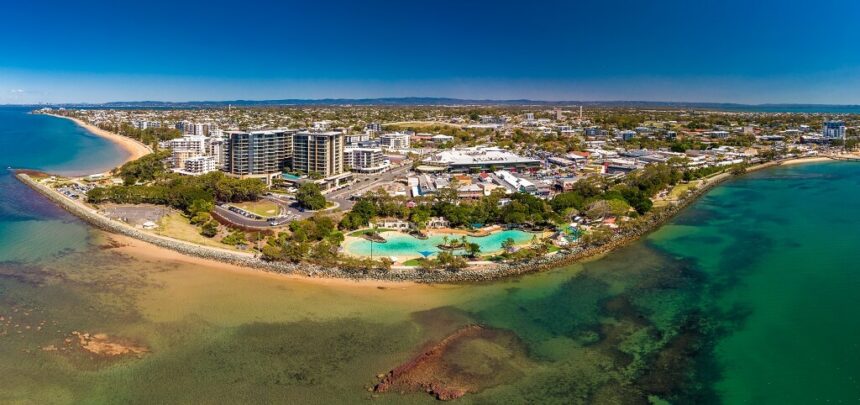
The City of Moreton Bay is one of the clearest examples in Queensland of a local government trying to convert rapid growth into long-term structural advantage. Its 2024–25 annual report says the city welcomed around 240 new residents per week during the year, while also managing the effects of rising living costs, housing instability, development pressure and the disruption caused by ex-Tropical Cyclone Alfred. That framing is important because it shows a city that is not simply celebrating population growth; it is grappling openly with the demands that growth places on infrastructure, services and governance.
What makes Moreton Bay particularly interesting is that it is trying to treat that growth as a platform for a broader economic repositioning. Its City of Tomorrow advocacy strategy says the municipality is planning for a future population of one million people over the next 30 years, and that its first Advocacy Plan helped secure almost $800 million in additional funding between 2021 and 2024. The strategy is explicit that partnerships and catalytic initiatives will be essential to getting there. That matters because it shows Moreton Bay thinking beyond the traditional council mindset of service provision toward a more proactive approach to economic shaping and large-scale infrastructure leverage.
A major part of that future-facing strategy is Moreton Bay Central and The Mill at Moreton Bay. Council materials describe The Mill as an educational and innovation precinct emerging from the redevelopment of the former Petrie paper-mill site, while compliance and impact-reporting documents say the precinct is designed to become a mixed-use destination with education, innovation, green space and community uses. That makes The Mill more than a land redevelopment story; it is one of the city’s clearest attempts to build a knowledge and innovation identity around a transformed industrial site.
The partnership with UniSC Moreton Bay is central to that identity. In April 2026, the City said it had invested more than $1.1 million in scholarships and bursaries since the university opened in 2020 and had recently confirmed the continuation of that partnership. City material linked those investments to stronger community outcomes and a high completion rate among recipients. This is an important collaborator detail because it shows Moreton Bay investing not only in buildings and precincts, but in the educational pathways that help make an innovation precinct feel real rather than symbolic.
Innovation and business support are also being scaled through external partnerships. Council’s economic and small-business reporting says Innovate Moreton Bay has entered a new partnership with Creative HQ, with a $1 million program spanning three years and a broader goal of helping local businesses access investors, venture-capital contacts and global innovation networks. The city’s industry-plan material reinforces that this is part of a wider ecosystem approach, linking business, government, education and research. That is a useful sign that Moreton Bay is trying to support enterprise growth as a deliberate layer of city-building, not merely as an indirect by-product of population growth.
The sports and major-events dimension of the story is also becoming more visible. The 2024–25 annual report says the Moreton Bay Indoor Sports Centre at Moreton Bay Central has been confirmed as a Brisbane 2032 Olympic and Paralympic Games venue, and that earthworks are progressing. That is a material development because it gives the city a landmark piece of long-term civic infrastructure tied directly to a national and international sporting event, while also promising lasting benefits for community sport, entertainment and activation after 2032.
The challenge for Moreton Bay is therefore not whether it has a growth story, but whether it can keep infrastructure, economic opportunity and community outcomes moving in step with that growth. Its own annual report openly references development pressure, housing instability, disaster response and budget strain, while also noting that advocacy has helped bring in more than $66 million from state and federal governments to ease immediate budget pressure. That mix of opportunity and constraint makes the current picture feel grounded rather than over-polished.
What makes the City of Moreton Bay a strong feature is that its collaborators are highly visible and relevant. UniSC Moreton Bay, Creative HQ, state and federal governments through advocacy funding, and the wider Brisbane 2032 infrastructure ecosystem all help explain how the city is trying to scale up. This is not simply a fast-growing outer-metropolitan council; it is a municipality attempting to build a larger economic, educational and civic identity around that growth. For your expanded government set, that gives Moreton Bay both substance and a clear future-facing angle.