


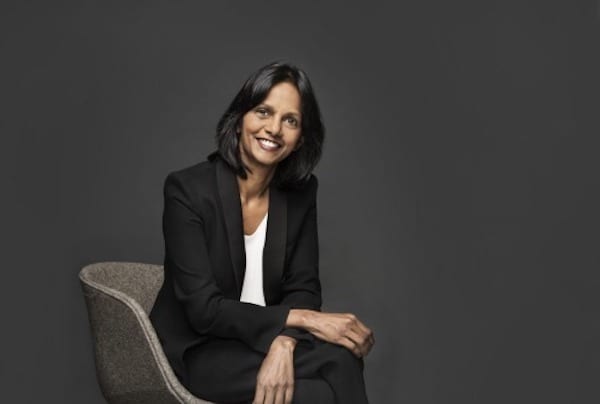
Shemara Wikramanayake: Leading Macquarie Through Global Complexity and the Energy Transition
Shemara Wikramanayake’s leadership at Macquarie Group is significant not only because of the scale of the institution she leads, but because of the way her career prepared her for its complexity. Macquarie identifies her as Managing Director and Chief Executive Officer, and its executive materials note that the Executive Committee is responsible for strategic and operational leadership to drive long-term sustainable shareholder value.
Her current role places her at the head of one of Australia’s most internationally important financial institutions. Macquarie’s 2026 investor materials describe the group as a global financial services business with offices in 30 markets, more than 19,000 employees and a further approximately 265,000 people employed across managed fund assets and investments.
Under Wikramanayake’s leadership, Macquarie has continued to deliver strong financial performance across market cycles. In May 2026, Macquarie announced FY26 net profit after tax attributable to ordinary shareholders of $4.847 billion, up 30% on FY25. The company also reported return on equity of 14.0%, compared with 11.2% in FY25, and said international income represented 68% of total income.
Those results are especially relevant because they show the resilience of Macquarie’s diversified model. Macquarie is not a conventional domestic bank. Its earnings come from asset management, banking and financial services, commodities and global markets, and capital advisory activities across many geographies. Wikramanayake’s leadership challenge is therefore not simply managing a balance sheet; it is allocating attention and capital across businesses that respond differently to interest rates, volatility, infrastructure demand, energy markets and global investment cycles.
Her current impact is also strongly tied to the long-term themes Macquarie is positioning around: digitisation, decarbonisation, demographics and deglobalisation. Those themes are not slogans for Macquarie; they shape real areas of investment and client activity. Wikramanayake’s profile is strongest when viewed through that lens. She leads a firm trying to profit from global change while also financing parts of the infrastructure and energy transition required by that change.
The energy transition is one of the most important parts of her leadership story. Before becoming CEO, Wikramanayake built deep credibility in infrastructure and real assets through Macquarie Asset Management. External profiles note that Macquarie Asset Management grew into a world-leading manager of infrastructure and real assets and a top 50 global public securities manager during her leadership of that business.
That earlier experience matters because it gave her a practical understanding of long-duration capital. Infrastructure, energy, transport and real assets require patient investment, regulatory knowledge and strong risk management. Those are exactly the capabilities needed in a world trying to finance decarbonisation, energy security and digital infrastructure simultaneously.
Wikramanayake joined Macquarie in 1987 after beginning her career as a corporate lawyer. She worked in Macquarie Capital for roughly two decades before becoming head of Macquarie Asset Management in 2008. Her earlier roles included heading Macquarie’s corporate advisory office in New Zealand, helping establish corporate advisory offices in Hong Kong and Malaysia, leading Macquarie Capital’s prudential team, and leading infrastructure and real assets activities in North America.
That history is important because it shows an executive who developed across regions, products and risk types before becoming CEO. She did not rise through a single domestic banking channel. She built experience in advisory, principal investment oversight, infrastructure funds, asset management and international expansion. That breadth is one reason she has been able to lead a firm as complex as Macquarie.
Her appointment in 2018 was also symbolically significant. She became Macquarie’s first female chief executive and one of the most prominent women leading a major global financial institution. But the more interesting leadership point is that her appointment was not symbolic alone. It followed a decade running one of Macquarie’s most important divisions and a career deeply embedded in the firm’s international expansion.
Under her leadership, Macquarie has had to manage not only growth, but scrutiny. Financial institutions operating in commodities, infrastructure, private markets and banking face regulatory, reputational and climate-related pressures. Recent reporting has highlighted executive-pay scrutiny, regulatory issues and criticism from climate advocates over fossil-fuel financing. A balanced profile should acknowledge that Wikramanayake leads a business whose influence attracts serious public examination.
That scrutiny does not diminish the leadership case; it sharpens it. Running Macquarie today means navigating the tension between returns, regulation, client demand, energy security and climate transition. Wikramanayake’s challenge is not to lead a simple “green finance” story, but to manage a global financial group operating across both existing energy systems and the capital-intensive shift away from them.
Her external roles reinforce that climate-finance dimension. She was appointed a Commissioner of the Global Commission on Adaptation in 2018 and joined the Climate Finance Leadership Initiative in 2019, an initiative led by Michael Bloomberg to mobilise private climate finance.
That matters because it shows her influence beyond Macquarie itself. She has become part of the global conversation about how private capital can support adaptation, mitigation and infrastructure resilience. Few Australian executives operate at that intersection of finance, policy and climate at comparable scale.