

Crust Gourmet Pizza Bar: Keeping a Premium-Pizza Niche Relevant Through Menu Innovation, Franchising and Brand Collaborations
Crust Gourmet Pizza Bar is one of the cleaner examples of an Australian-founded chain carving out a distinct position inside a crowded category. The brand’s own history page says Crust began in 2001 in Annandale, Sydney, with a vision to serve restaurant-quality pizza and premium flavour combinations that offered “more delicious for your dollar.” More recent Crust franchise materials say the network now includes more than 130 stores, giving the brand meaningful national presence without pushing it into the scale of the largest mass-market pizza players.
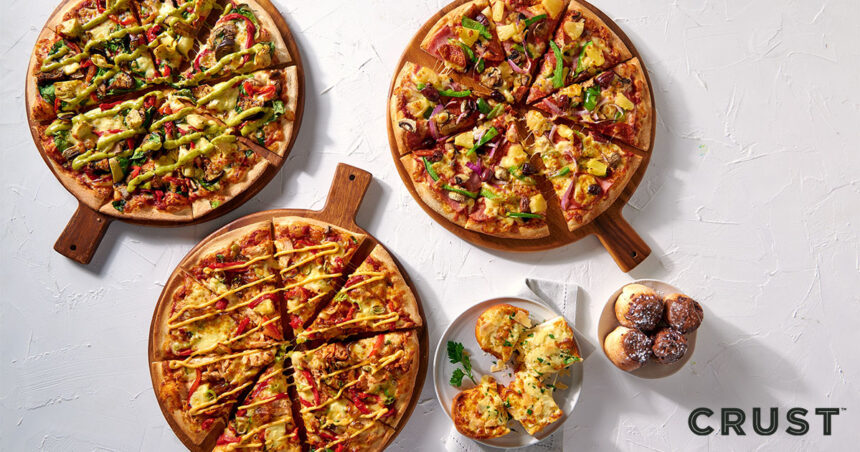
That positioning is still central to the way Crust presents itself. Its consumer-facing site describes the chain as Australia’s gourmet pizza specialist, with hand-made pizzas and adventurous flavours sitting at the centre of the offer. The menu itself reinforces that identity, leaning into items such as Garlic Prawn, Moroccan Lamb, Truffle Beef Rossini and other combinations that clearly separate Crust from purely value-led pizza competition. That matters because the brand’s value proposition is not simply about convenience; it is about a more premium and differentiated pizza experience within a delivery-friendly format.
The chain also still depends heavily on its franchise system. Crust sits inside the Retail Food Group brand portfolio, and both the parent company’s materials and Crust’s own franchise brochure frame the brand as part of a broader Australian franchising platform. RFG’s corporate positioning as Australia’s largest multi-brand retail food franchise owner matters here because it suggests Crust’s scale and operational support are tied not only to the individual brand, but to a wider listed franchisor infrastructure.
What makes Crust particularly interesting right now is how deliberately it is trying to stay contemporary. In 2025 the brand introduced a High Protein Pizza Base, positioning it as a more mindful swap for consumers still wanting pizza while thinking about macros and healthier choices. That is a small product move on its own, but strategically it is important: it shows Crust trying to protect its premium position not only through flavour but also through menu adaptation to current consumer habits.
The brand has also leaned into broader eating occasions. In 2024, Crust launched its Lunch Piadina offer nationally across more than 130 stores, explicitly framing it as a move into the lunch market. This is a meaningful development because pizza chains can often get trapped in dinner-only relevance. Expanding into lunch gives Crust another route to frequency, particularly in suburban and office-adjacent markets where delivery and pickup can support smaller daytime occasions.
Collaboration has become another part of how the chain stays visible. One of the clearest examples was the Crust x Rack ’em Bones partnership, which produced a three-pizza collaboration built around slow-cooked barbecue flavours and a new “Tomatoque” sauce. That is a good brand-fit example: the collaboration still felt recognisably Crust, but it also gave the chain a way to refresh the menu and tap into a more indulgent flavour story without having to permanently rework the entire offer.
Operationally, Crust also shows signs of leaning more into direct-value and convenience messaging. In early 2025, the chain launched Free Delivery Thursdays, explicitly positioning the offer as a weekly convenience and value play. Its FAQ also notes that, during peak periods or in some areas, Crust stores may use external delivery providers to get pizzas to customers more quickly. Together, those details show a brand that still wants to own the premium-pizza lane, but is realistic about the importance of delivery economics, convenience and customer friction in the current market.
At the menu and marketing level, the chain continues to push flavour-forward identity rather than commodity pizza language. The Meat Deluxe Collection launched in 2025 is one recent example, framed around winter cravings and indulgence. That matters because it reflects a consistent brand choice: Crust is not trying to out-McPizza the mass players on price. It is trying to remain the chain people choose when they want pizza that feels slightly more restaurant-like, slightly more indulgent and slightly more imaginative.
The challenge, naturally, is that premium positioning has to keep earning its place. Pizza is a brutally competitive category in Australia, and being “better” is not enough unless customers can also see convenience, delivery relevance and enough menu newness to justify the trade-up. But that is where Crust’s current strategy looks sensible. The combination of strong flavour identity, franchise support through RFG, menu innovation, collaborations like Rack ’em Bones, and broader daypart relevance gives the chain a better chance of staying differentiated than if it simply defended its legacy menu.
For your expanded food-and-beverage library, Crust works well because it brings in a different kind of Australian restaurant-chain story. It is not a giant, and it is not a brand-new insurgent. It is a long-running, Australian-founded chain that has kept its niche by being clear about what it is: premium pizza, franchise-led reach, and a menu built to feel a little more considered than the mainstream. In a category where sameness is common, that remains a valuable identity.