
Noumi: Rebuilding Momentum Through Brands, Ingredients and Smarter Partnerships
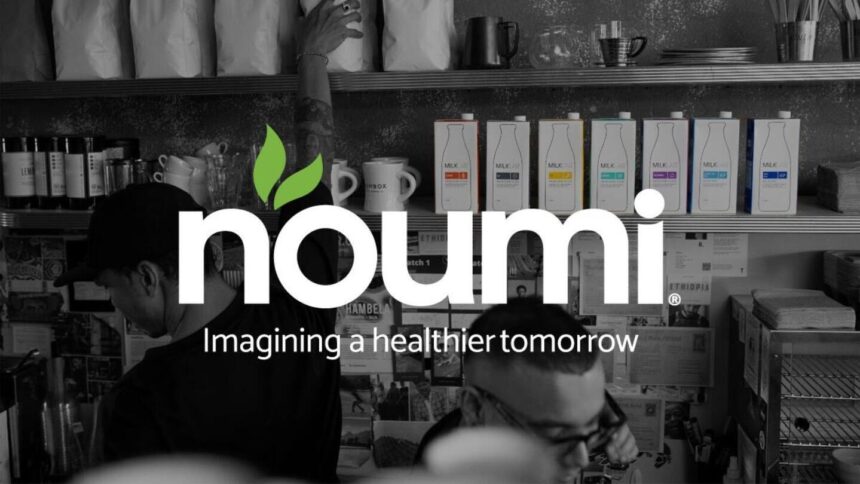
Noumi today presents itself as an Australian food and beverage company built around positive nutrition. Its portfolio spans dairy, plant-based milks, nutritionals and sports nutrition, with branded products and co-manufactured lines sold in Australia and overseas. The company says its roots go back to 1984, when it began as a small business specialising in plant-based milks, before expanding into a broader platform that now includes long-life dairy, premium protein ingredients and consumer nutrition products.
That long arc matters because Noumi is no longer just one product story. It operates across two main manufacturing sites — Ingleburn in New South Wales and Shepparton in Victoria — and says it exports to 24 countries across Asia, the Middle East and South Africa. Its current brand set includes MILKLAB, Australia’s Own, Vital Strength, Crankt, Uprotein and its B2B nutritionals platform, giving it a blend of retail, foodservice and ingredient exposure.
There is a practical strength in that structure. Noumi is not only selling consumer-facing products; it is also working further upstream in ingredient processing and further across the value chain through co-manufacturing and export. That gives the business more than one route to relevance, especially in categories where consumer preferences, raw input costs and channel economics can shift quickly.
Its FY25 numbers reflected a business that kept moving forward operationally even while legacy issues still affected the statutory result. Noumi reported revenue of $595.8 million in FY25, up from $589.8 million in FY24, and adjusted operating EBITDA of $57.4 million, up from $50.8 million the year before. Within that, Dairy & Nutritionals produced net revenue of $413.8 million and Plant-based Milks delivered $182.0 million, with the latter described as achieving record revenues and earnings.
The strongest brand story inside the portfolio is MILKLAB. Noumi’s annual report says MILKLAB continued to grow in key domestic and international channels in FY25, with its international strategic focus helping generate a 20.1% year-on-year revenue increase, while MILKLAB Oat grew 28.4%. The company also said MILKLAB expanded further in Australian grocery after entering retail in FY24, rapidly gaining share in the barista segment.
What makes MILKLAB especially useful editorially is that the brand is built around collaboration rather than generic FMCG language. Noumi describes it as an Australian “colLABoration” between foodies, baristas and farmers, developed with input from coffee professionals including baristas, Q graders, roasters, quality technicians and café owners. That framing gives the brand a more credible industry identity than a simple plant-based milk launch narrative.
The supply side of that story is also more concrete than it first appears. In a 2025 Noumi profile on procurement, the company said Head of Procurement Mick Betson works closely with Select Harvests to source Australian almonds for MILKLAB Almond, and that more than 40 million litres of MILKLAB Almond are produced each year. For a profile like this, that is exactly the kind of supplier detail that helps the article feel grounded: the finished brand is linked back to real agricultural sourcing and a named Australian supplier relationship.
Noumi’s dairy business has a similar operational backbone. On its beverages page, the company says its Shepparton and Ingleburn facilities use UHT technology to produce long-life dairy products, with supplying farms located close to the sites to support milk quality, logistics efficiency and traceability. It also says the dairy business is supported by a strategic partnership with Australian Fresh Milk Holdings, giving Noumi access to scalable dairy sourcing in northern Victoria.
That partnership is worth noting because it speaks directly to execution, not just marketing. In a category where milk quality, supply continuity and cost discipline are all central, Noumi is clearly trying to strengthen the raw-material side of the business as much as the brand side. The company also says its Shepparton facility processes more than 260 million litres of milk a year and works with around 34 dairy farms, reinforcing the scale of that supply chain.
There is also a more technical growth angle within the Nutritionals business. Noumi’s FY25 annual report highlighted investments in Shepparton’s nutritionals microfiltration system to improve lactoferrin recovery and quality, alongside investments in homogenisers to improve product quality and shelf life. The company said those upgrades were expected to support increased revenue in FY26, especially in higher-value protein ingredients such as PUREnFERRIN.
The wider growth plan remains brand-led but supported by channel partnerships. Noumi said MILKLAB continued to invest in café partnership activations in FY25, including its “MILKLAB Coffee Shop Sets” program with national cafés, baristas and DJs. In China and Indonesia, the company has also highlighted café and distribution partnerships, including work with MCR Roasters in Fuzhou and, in Indonesia, collaboration with distributor PT Kurniamitra Duta Sentosa Tbk.
The company has not had a simple recent history, and the public record reflects that. Its FY25 annual report still carried litigation and transformation expenses, and the statutory result remained affected by fair-value and impairment items. At the same time, management emphasised that adjusted operating EBITDA had improved, the Dairy & Nutritionals segment had strengthened, and Plant-based Milks delivered another record year.
That is the most balanced way to frame the challenge section. Noumi is not a clean turnaround fairy tale, but it is also not standing still. The more persuasive story is that the business has been rebuilding around sharper execution, better segment performance, stronger sourcing partnerships and clearer brand momentum — particularly through MILKLAB and the operational uplift in Dairy & Nutritionals.
Culture and engagement are another part of the recovery story. Noumi reported 90% participation in its Gallup employee engagement survey in FY25 and said overall engagement scores improved year on year, while leadership development and frontline capability remained areas of focus. It also framed its operating culture around integrity, respect, accountability, collaboration, creativity and excellence.
There is a community dimension as well. In FY25, Noumi announced a three-year partnership with Shepparton Foodshare and said it donated more than 80,000 litres of dairy milk products in the first year of the program. It is a small detail in strategic terms, but it reinforces the company’s effort to connect local manufacturing, agricultural sourcing and regional community presence in a more coherent way.
What makes Noumi a compelling profile for your site is that it combines consumer brands, technical manufacturing and agricultural supply in a way that feels distinctly Australian. It is working with dairy farmers, ingredient suppliers such as Select Harvests, channel partners in cafés and export markets, and strategic sourcing partners such as Australian Fresh Milk Holdings — all while trying to build brands that can travel well beyond the domestic market.
The business still has work to do, but the operating pieces are becoming easier to see. MILKLAB is growing, Dairy & Nutritionals is improving, ingredient capability is deepening and the supplier network appears increasingly central to the company’s future. On that basis, Noumi looks less like a company searching for an identity and more like one steadily rebuilding around the parts of the portfolio that can scale with conviction.