

Select Harvests: Scaling an Integrated Almond Business Through Orchard Depth, Processing Efficiency and Stronger Supply Relationships
Select Harvests has built its position as one of Australia’s most established almond businesses by staying close to the full value chain. The company describes itself as a supplier to Australian and international almond markets, with operations spanning horticulture, orchard management, processing, and sales and marketing. That integrated model matters because it allows the business to influence quality, timing, logistics and customer service at multiple points rather than relying on a single narrow margin pool.
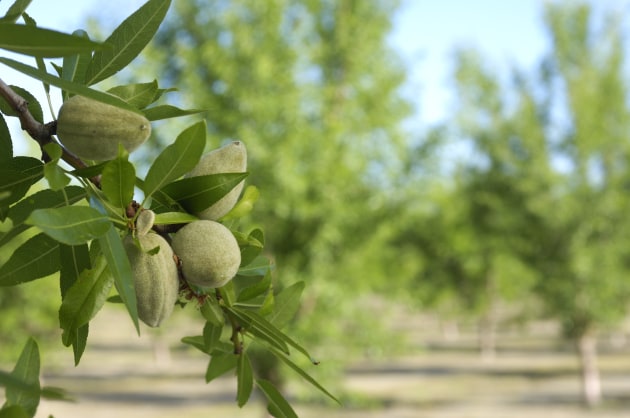
Its orchard footprint is part of that resilience story. Select Harvests says it has deliberately established orchards across three distinct geographic regions in Australia, helping diversify production risk and improve supply reliability across varying environmental conditions. In an agricultural business where climate, water and bloom conditions can materially affect output, that regional spread is more than a footnote — it is part of the operating strategy.
FY2025 showed why that model still has real power. Select Harvests reported EBITDA of $82.4 million, NPAT of $31.8 million, a crop of 24,903 metric tonnes, an average almond price of A$10.18 per kilogram and a 51.3% reduction in net debt. It also described itself as having materially improved the balance sheet, positioning the business to stay financially strong through the natural cycles of agriculture.
Those results are even more notable when set against the crop backdrop. The company said its FY2025 crop was down 15.7% year on year, while volumes from external growers fell to 7,329 metric tonnes. It linked that softer volume to lower Australian crop conditions flagged by the Almond Board of Australia and to continued weaker yields in New South Wales orchards still recovering from earlier wet seasons.
The best way to understand Select Harvests, though, is through Carina West. The company said the Carina West Processing Facility processed 32,233 metric tonnes in FY2025 and ran at higher hulling and shelling speeds than target, allowing primary processing to finish earlier and at lower cost. Faster throughput, lower cost per tonne and consistently high product quality are not glamorous talking points, but they are exactly the kinds of execution details that underpin a scaled agribusiness.
Carina West is also the clearest example of the company’s current growth project. Select Harvests said the next phase of Project Optimus is nearing completion and will take annual processing capacity at Carina West to 50,000 metric tonnes, adding 20,000 tonnes of extra capacity over the last couple of years at relatively low capital cost. That expansion is important because it strengthens the platform not only for Select Harvests’ own crop, but also for almonds sourced from external growers.
That supplier angle deserves more attention. Select Harvests said it continued focusing on external growers in 2025, added resources to manage those relationships and expects contracted volumes to rise again for the 2026 crop. It also recognised amounts owing to external growers and inventory sourced from them in its accounts, underscoring that these are not incidental relationships but an active part of how the business scales product flow through its system.
The company’s value-add strategy is another reason the profile holds together well. Its annual report said value-add sales reached 5,952 metric tonnes in FY2025, while the almond paste segment grew 20.7% and other value-added products were supported by rising demand in China, Southeast Asia and the European Union. That matters because it shows Select Harvests trying to move beyond simply selling bulk almonds and into higher-value product pathways.
There is also evidence of operational improvement beyond the orchard and plant. The company said changes to logistics arrangements in FY2025 led to more accurate documentation, more efficient shipping and clearance in overseas ports, and higher customer satisfaction. Combined with stronger pricing, that contributed to faster conversion of inventory and sales into cash and supported the sharp reduction in net debt.
The partner lens is a little different here than it is with an engineering or construction company, but it is still meaningful. For Select Harvests, the key operating relationships are with external growers, the beekeeping industry, state governments, and the Almond Board of Australia. Those are the groups that shape pollination, crop volume, orchard support, market intelligence and, increasingly, the reliability of the broader almond supply chain.
Bee supply, in particular, remains a crucial issue. Select Harvests said the availability of bees became problematic because of climatic factors, the spread of varroa mite and border movement restrictions, but that it was still able to secure the number of bees required to pollinate the bloom. In its risk disclosures, the company added that it continuously engages with the bee-keeping industry, the Almond Board of Australia and state governments to assess supply risks and manage the issue over time.
The company has also shown that it is willing to invest physically to manage crop volatility. In its FY2025 results presentation, Select Harvests said frost caused about 500 metric tonnes of losses, but that the impact was minimised by 310 frost fans already in place. That is a useful detail because it captures the business at its best: practical, infrastructure-led and focused on controlling what it can in an inherently unpredictable environment.
Not every recent challenge has been agronomic. The company’s public materials still reflect the reality of cyclical pricing, weather disruption and crop recovery. But the tone of its FY2025 reporting was notably more confident than defensive, pointing instead to improved profitability, a stronger balance sheet, processing expansion, better logistics execution and stronger service levels to customers around the world.
That improvement was recognised externally as well. Select Harvests said it was awarded Regional Exporter of the Year in the Governor of Victoria Export Awards 2025, which it linked to progress across the business and improved service to global customers. For a company with export exposure and a growing value-add agenda, that recognition helps reinforce the broader direction of travel.
There is also a leadership and capability story underneath the operational one. The company says its executive team is focused on sustainable returns and premium almond marketing, while its public materials point to disciplined leadership, stronger financial control and innovation-led operational upgrades. That framing may sound modest, but it fits the business: Select Harvests is not trying to reinvent itself overnight; it is trying to become a stronger, more efficient version of what it already does well.
What makes Select Harvests a particularly strong profile is that it combines scale with specificity. The story is not abstract. It runs through orchards in multiple regions, processing infrastructure at Carina West, relationships with external growers, pollination risk management with industry bodies, and value-add demand in export markets. Those pieces make the company feel tangible rather than theoretical.
Looking ahead, the company appears well placed if it can keep executing on the same fundamentals: orchard performance, processing efficiency, grower relationships, logistics discipline and higher-value product sales. With Project Optimus nearing completion, a healthier balance sheet and a more stable operating base, Select Harvests looks increasingly like a business that has moved from recovery into a more confident phase of scaled agricultural growth.