

City of Parramatta: Building a Global City Through Civic Investment, Cultural Infrastructure and Metropolitan Connectivity
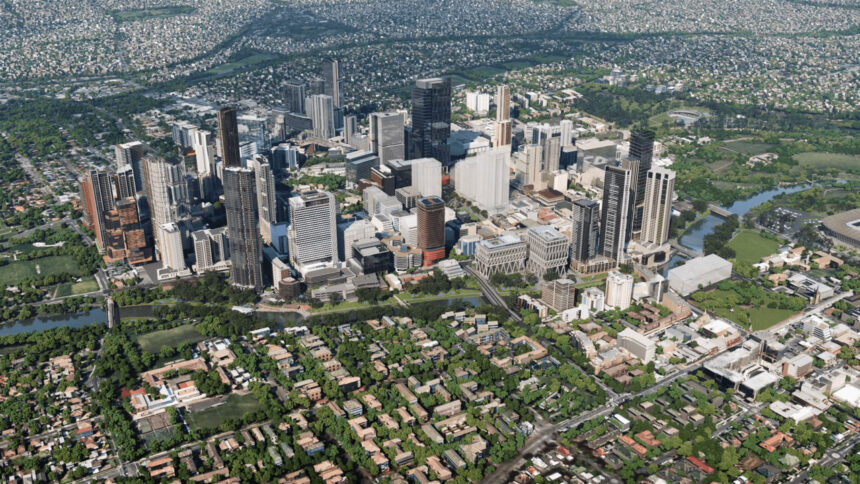
The City of Parramatta increasingly describes itself as a city government rather than a suburban council, and its recent reporting makes clear why. In its 2024–25 annual report, the City said Parramatta was “growing into a global city,” supported by landmark investments including Parramatta Square, PHIVE, Parramatta Light Rail and the coming Powerhouse Parramatta. The same report said the city’s gross regional product had reached $28.86 billion, while longer-term planning materials say the population is forecast to grow by nearly 50% between 2025 and 2046. That is a very different context from routine municipal administration; it is the context of a fast-transforming second CBD within metropolitan Sydney.
That city-building identity is also visible in the physical shape of the civic core. Council’s own pages describe PHIVE at 5 Parramatta Square as the city’s new community, cultural and civic hub — a place that combines council services, cultural activity, library functions, business uses and public gathering space in the heart of the CBD. The City also explicitly frames PHIVE as part of Parramatta’s civic heart rather than as a standalone building, which matters because it shows a council thinking about the urban centre as a connected network of institutions, spaces and experiences rather than simply a cluster of projects.
The next major connective element in that civic core is Civic Link. Parramatta says Civic Link will become a green, activated pedestrian spine running from Parramatta Square to the Parramatta River, linking the railway, light rail, future Sydney Metro West and the Powerhouse Museum precinct. Council’s current project pages say the work is being delivered in partnership with both the Australian Government and the NSW Government, which is an important marker of scale. Civic Link is not merely a streetscape upgrade; it is infrastructure intended to help turn a fast-growing business district into a more coherent and legible city centre.
The transport story around Parramatta is just as significant. Council’s Metro West materials describe the line as a once-in-a-century infrastructure investment that will double rail capacity between Parramatta and the Sydney CBD, with a target travel time of about 20 minutes. In the context of Parramatta’s global-city ambitions, that matters enormously: better connectivity is not simply about mobility, but about strengthening Parramatta’s role as an employment, housing and cultural centre in its own right. The City’s messaging makes that connection explicit, repeatedly linking transport upgrades to jobs, housing growth and metropolitan importance.
The cultural agenda is becoming more powerful as well. Parramatta’s Powerhouse page says Council strongly supported the relocation of the Powerhouse Museum because of the cultural and economic benefits it would bring, and notes that in 2017 Council and the NSW Government signed a Heads of Agreement over the Riverbank site to create a new cultural precinct on the Parramatta River. Later Council pages say the museum will sit within a broader civic and cultural corridor that includes Civic Link and the riverfront. This is one of the clearest examples in local government of a council using partnership with state government to reshape the cultural gravity of an urban centre.
That wider city-making agenda is also underpinned by vision. Parramatta 2050 is described by Council as its global-city vision, identifying the places, directions and initiatives that will help transform Parramatta into a “global powerhouse.” The significance of this is less in the slogan than in the consistency of the policy direction. Across the annual report, PHIVE, Civic Link, Powerhouse, transport advocacy and community planning materials, the City’s message is broadly the same: Parramatta is preparing not just for growth, but for a more prominent metropolitan and international role. That consistency strengthens the profile considerably.
The challenge for Parramatta is not generating ambition but coordinating delivery. A municipality undergoing this level of transformation has to manage public realm, culture, transport, density, civic identity and community expectations at the same time, often through layers of state and federal partnership. But Council’s own materials suggest it understands that tension well, and is deliberately positioning itself as both local steward and city-shaping advocate. That gives Parramatta unusual weight as a government-sector feature: it is a local government whose work increasingly resembles metropolitan-statecraft.
What makes the City of Parramatta especially strong in this expanded set is the clarity of its collaborator ecosystem. The Australian Government, NSW Government, Transport for NSW, the Powerhouse cultural project and the city’s own civic institutions like PHIVE all sit visibly inside one larger urban story. That makes Parramatta feel not just fast-growing, but strategically assembled — a city using partnership, infrastructure and culture to strengthen its identity at a scale few Australian councils can credibly claim.