
City of Wanneroo: Planning for Growth Through Coastal Projects, New Precincts and Long-Range Land Strategy
The City of Wanneroo is one of the clearest examples of a municipality being reshaped by population growth rather than simply responding to it at the margins. Its public-facing materials describe it as one of the fastest-growing local governments in Australia, with around 8,000 new residents a year, a broad geographic footprint and more than 200,000 people already living within the city. That scale matters because it changes the nature of local government work: for Wanneroo, planning, infrastructure, recreation and coastal activation are not peripheral issues, but central questions about how a much larger city should be formed over time.
That is why the East Wanneroo planning framework is so important. The City says the East Wanneroo District Structure Plan, released by the Minister for Planning in 2021, provides a long-term vision for more than 8,300 hectares of land, with capacity for 150,000 residents, 50,000 dwellings and up to 20,000 jobs. Separate City updates add that the district will eventually include dozens of schools and be built out over multiple decades. This is not a routine rezoning exercise. It is one of the most significant long-range suburban growth frameworks in metropolitan Perth.
That long horizon also says something important about the City’s role. Wanneroo is not merely approving development application by application; it is helping sequence the growth of an entire future district. The City’s East Wanneroo pages explicitly say that development will occur in stages over decades, which means the municipality has to think about transport, schools, jobs, services, drainage, recreation and community identity well before many of the future neighbourhoods physically exist. This gives Wanneroo a much stronger strategic-planning profile than a more settled local government might have.
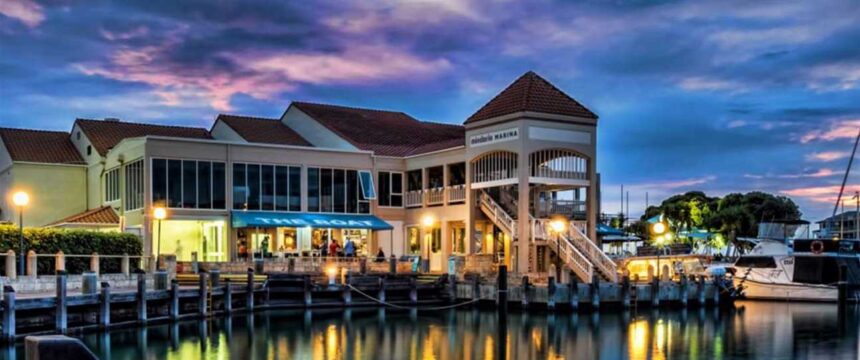
The coastal side of the story is becoming more visible too. The Yanchep Lagoon Improvement Project is described by the City as a major place-based initiative intended to create greater opportunities for tourism, recreation and economic growth, with future development guided by engagement with residents and stakeholders. The project is also being tied into wider accessibility through a Transperth bus-route trial, which now includes a stop at Yanchep Lagoon. That combination of precinct enhancement and transport connectivity is a useful example of how Wanneroo is trying to make local place-making more meaningful than a simple public-space refresh.
The inland growth story is also being supported by new community infrastructure planning. The Wanneroo Recreation Precinct is described as one of the City’s key advocacy projects, with proposed redevelopment to include a new Sports Hub and a separate Community Hub at Scenic Park. The City’s materials explicitly acknowledge $5 million in funding from the Department of Local Government, Sport and Cultural Industries, which is exactly the kind of partner detail that strengthens the profile: it shows the precinct is not only a local aspiration, but a project already backed by state support.
Those projects also reveal the balancing act the City is now performing. On one hand, Wanneroo has to plan for huge future urbanisation in places like East Wanneroo. On the other, it must keep delivering usable coastal and community assets for current residents in areas like Yanchep and Scenic. That dual role — planning the future city while serving the existing one — is one of the reasons the municipality reads as more substantial than a simple growth-corridor council.
The main challenge is therefore scale itself. Rapid growth puts pressure on land planning, social infrastructure, recreation facilities, transport, tourism assets and council capital programs all at once. But Wanneroo’s public materials suggest the City is at least approaching that challenge through structured long-range planning and targeted project advocacy rather than just reacting to population increase as it occurs. In government-sector terms, that makes the City an interesting case study in growth management as much as in project delivery.
What makes the City of Wanneroo a strong feature is the clarity of the collaborator network around it. The Minister for Planning, Transperth, the Department of Local Government, Sport and Cultural Industries, and the resident/stakeholder engagement built into the Yanchep Lagoon precinct all show a local government working through real partnership structures. In a state where the north-west metropolitan corridor will continue to grow strongly, Wanneroo looks increasingly like a municipality that is being shaped by — and helping shape — some of Perth’s most consequential suburban expansion.