

Ingenia Communities: Scaling Residential Community Development Through Land-Lease Growth, Acquisitions and Broader Platform Depth
Ingenia Communities is larger than some of the smaller-cap names in your broader article library, but it remains highly relevant here because of how directly it has committed to land lease and community development as a national growth platform. Its FY25 property-portfolio release says Ingenia is one of Australia’s largest owners, operators and developers of land-lease, rental and holiday communities, with an interest in and management of a $2.7 billion property portfolio. The same document lists over 100 communities across Australia, which makes Ingenia one of the clearest scaled examples of community-led residential development in the public market.
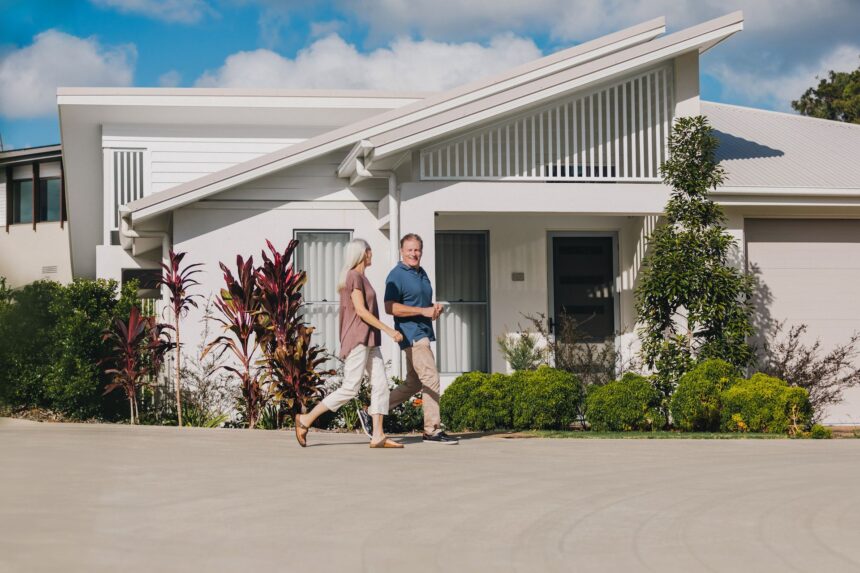
The land-lease model itself is central to the company’s positioning. Ingenia’s Lifestyle page says residents can own the home without buying the land, paying council rates or handling ongoing grounds maintenance, making the product especially appealing to downsizers and older Australians looking for a lower-friction housing option. This is not simply marketing language; it speaks to a very deliberate operating model in which affordability, simplified ownership and community amenities combine into a distinctive alternative to traditional retirement housing or standard detached-home ownership.
Development is not a side note inside that platform — it is one of the main growth engines. Ingenia’s Development page says a dedicated in-house team is creating new, high-quality, sustainable over-55s communities and upgrading existing accommodation across the group’s rental and holiday businesses. The company explicitly describes development as a key driver of land-lease growth, which is important because it means Ingenia is not merely acquiring mature communities and harvesting cash yield. It is actively creating new residential supply in segments where demographic tailwinds remain strong.
Queensland provides one of the clearest examples of that current pipeline expansion. Ingenia announced the off-market acquisition of two greenfield sites at Yeppoon and Highfields, saying the transactions would add more than 800 home sites in attractive Queensland markets. The company noted that the Taroomball site at Yeppoon already had approval for 286 land-lease homes and associated amenities, while the Highfields site extended Ingenia’s presence in the Toowoomba market. These are exactly the kinds of moves that make Ingenia relevant within a broader residential-land and community-development discussion: they are growth acquisitions tied directly to new-home creation rather than to passive balance-sheet expansion.
The company has also built scale through acquisition and partnership. Ingenia’s Lifestyle page says it acquired Seachange Lifestyle Resorts in Queensland in 2021, while its property-portfolio materials say the group also manages and co-invests in communities held within its development joint venture with Sun Communities. Those two references matter because they show a business using multiple routes to expand: organic development, brand/platform acquisition and institutional co-investment. That combination gives Ingenia a more sophisticated growth architecture than a simple “developer of over-55s communities” label would imply.
The supporting ecosystem around the land-lease product is another important differentiator. Ingenia said in 2021 that it worked with Land Lease Home Loans to establish a financing solution for residents of land-lease communities, with the group providing seed capital and supporting the launch of the platform. That is a particularly meaningful partner detail because access to suitable finance has often been one of the friction points in the land-lease market. By helping create a dedicated lending pathway, Ingenia was not only selling communities — it was helping strengthen the product infrastructure around them.
There is also a more forward-looking sustainability and resident-services angle to the current story. Ingenia’s 2025 public materials say Ingenia Connect is available across land-lease communities as a free wellbeing and care-concierge service supporting independent living. The company also announced Australia’s first all-Green Star Homes designed community, with certification covering 262 homes in Beveridge, Victoria. Those initiatives do not replace the core land-development story, but they do show a platform trying to differentiate itself through resident support and sustainability rather than through housing product alone.
The challenge for Ingenia is that a larger, more diversified community platform also brings more execution complexity. The company has to balance acquisitions, development delivery, resident experience, financing innovation and sustainability ambitions at the same time, all within a housing product category that still sits somewhat outside traditional residential-market assumptions. But its public reporting suggests it is doing so from a position of scale and increasing maturity. For your purposes, that makes Ingenia a valuable inclusion: it shows what residential community development can look like when it becomes a national platform rather than a niche experiment.