

Omega Oil & Gas: Advancing a Taroom Trough Frontier Play with a Cleaner Balance Sheet and Bigger Appraisal Ambition
Omega Oil & Gas is still early in its corporate life, but the company already has a clear identity. Its website describes Omega as a Brisbane-based oil and gas explorer focused on the Canyon Project in Queensland’s Taroom Trough, an area it frames as an emerging frontier for Australian oil and gas with overpressure, liquids-rich gas and oil potential. The company’s messaging is built around one central idea: that the Taroom could become a significant new domestic hydrocarbon province if appraisal continues to validate the early well results.
The Canyon Project is the core of that story. Omega’s project page says the asset already includes Canyon-1, Canyon-2 and Canyon-1H, and carries a gross contingent gas resource estimate of 1.73 TCF (2C) and 4.50 TCF (3C). It also highlights the project’s location near existing infrastructure and market-access corridors, which is important because frontier resources become much more interesting when they are not stranded from commercial networks.
The company’s financial positioning has also improved. On its investor hub, Omega says it had A$43.4 million of market capitalisation, A$15 million cash at 31 December 2025 and nil debt, which is a meaningful base for a small-cap explorer entering a heavier appraisal phase. That cleaner balance sheet has become a recurring part of how management presents the business.
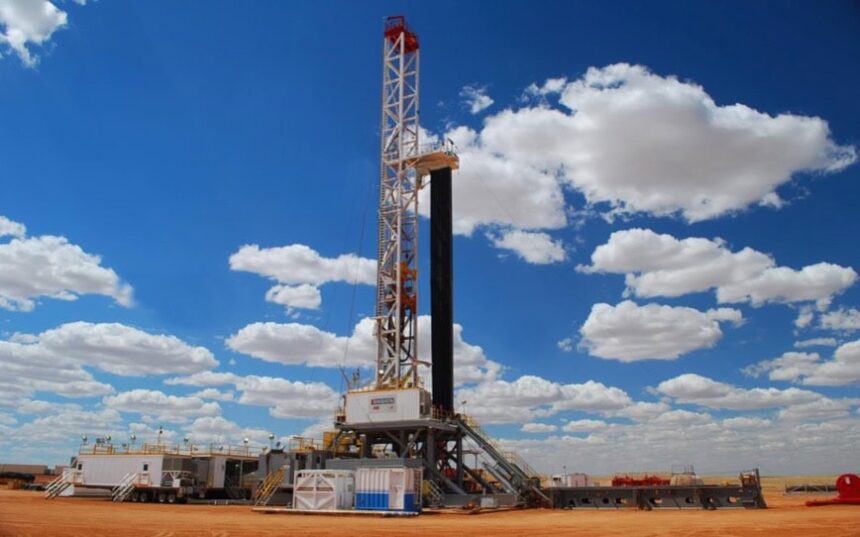
2026 has already brought a meaningful expansion of scope. Omega’s official channels said the company secured a Helmerich & Payne rig for an expanded Taroom Trough drill program, and it also announced that it and its partners had been awarded new acreage in the Taroom. On Omega’s own site, that acreage award is explicitly linked to what management expects to be a transformational year for proving up the region’s oil and gas potential.
That partner angle is increasingly relevant. Omega’s homepage and news feed refer to new acreage being awarded to Omega and its partners, and external coverage curated on the company’s site names Beach Energy among those partners. For a small explorer, that matters: the presence of a larger and more experienced upstream name helps validate the regional thesis and suggests the Taroom story is attracting broader industry attention, not just retail-market curiosity.
There is also an interesting strategic tie to Elixir Energy. Omega’s official ASX-announcement page lists a January 2026 item saying Omega nominated two directors to the Elixir board, which signals that the company is thinking not only about its own acreage position but also about influence and alignment across the wider Taroom Trough landscape. That is a subtle but important part of the story because scale in a frontier basin is often built through positioning as much as drilling.
The challenge section is obvious, but not fatal. Omega is still an appraisal-stage company, which means commerciality, flow sustainability, development economics and future capital needs are all still being tested rather than fully proven. The company’s appeal today is therefore less about current production and more about the combination of resource scale, cleaner finances, nearby infrastructure and the fact that 2026 appears set up as a much more active de-risking year.
What makes Omega a compelling feature is that the company already feels more substantial than a one-well micro-cap story. Canyon has a meaningful contingent resource base, Helmerich & Payne has been secured for drilling, Beach Energy is part of the broader acreage picture, and the balance sheet is stronger than many junior peers. If the next appraisal phase keeps moving in the right direction, Omega could become one of the more interesting small-cap energy stories in eastern Australia.