
Greg Goodman: Turning Industrial Property into Global Essential Infrastructure
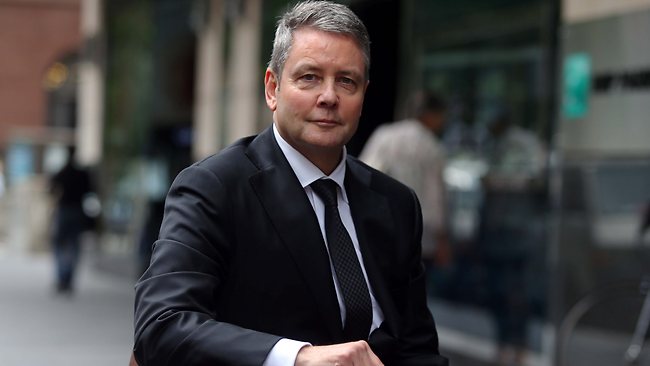
Greg Goodman’s career is one of Australia’s great long-duration business-building stories. Goodman Group’s own history says the business was founded by Greg Goodman, who remains Group Chief Executive today, and that it has grown from one industrial building in South Sydney in the early 1990s to hundreds of properties across 15 countries.
That continuity is the most important feature of Goodman’s leadership. Many founders build early momentum and then hand over to professional managers. Goodman has stayed in the role long enough to lead the company through several distinct market eras: industrial property, logistics real estate, e-commerce distribution, capital partnering and now data-centre-linked essential infrastructure.
Under his current leadership, Goodman Group has become far more than a landlord of warehouses. It is now a global owner, developer and manager of logistics and data-centre infrastructure in major urban markets. Goodman’s FY25 annual report described a $85.6 billion portfolio, a $12.9 billion development work-in-progress pipeline, and a growing data centre program that represented 57% of development WIP at 30 June 2025.
That data-centre pivot is one of the most important recent achievements of Goodman’s current role. Goodman has spent decades assembling scarce, well-located industrial land close to major consumers and infrastructure. The rise of cloud computing and AI has made many of those locations increasingly valuable for data infrastructure. Goodman’s leadership has been to recognise that this is not a departure from logistics, but an extension of the same underlying thesis: essential infrastructure must be located close to demand.
The FY25 numbers show the scale of the business he now leads. Goodman reported operating profit of $2.311 billion for FY25, up 13%, and operating earnings per security of 118 cents, up 9.8%. The group also had $72.1 billion of external assets under management at 30 June 2025, with management earnings up 7.9%.
Those figures are important because they show the success of Goodman’s capital-light partnership model. Goodman is not simply using its own balance sheet to own everything. It manages capital alongside institutional partners, earns management and development income, and co-invests in assets where it has operating expertise. That structure has allowed the company to scale globally without relying only on traditional balance-sheet ownership.
The February 2025 equity raising was another marker of Goodman’s leadership. The FY25 annual report said Goodman undertook its first public market capital raising since 2012, raising $4.0 billion to fund the next phase of growth, particularly around data centres, and that the raise was three times oversubscribed.
That capital raising matters because it shows investor confidence in Goodman’s next phase. Raising equity at scale is not always welcomed by shareholders, especially if it dilutes near-term earnings. But in Goodman’s case, the raising was connected to a clear growth opportunity: data centres, power access, development pipelines and long-term demand from cloud and AI customers.
Goodman’s past achievements provide the foundation for this current moment. The company’s history says Goodman listed on the ASX in 1995 with eight Sydney properties and a market capitalisation of $37 million. It later became Macquarie Goodman after major corporate transactions, then Goodman Group after Macquarie Bank sold its stake. Over time, the business expanded into Europe, Asia and the Americas through acquisitions, partnerships and organic growth.
That history reveals a leader who understood industrial property before the market fully appreciated it. For a long time, warehouses were viewed as less glamorous than office towers or retail centres. Goodman helped prove that logistics real estate could become a premium global asset class when tied to consumption, supply chains and urban scarcity. That strategic insight is one of his biggest career achievements.
The company’s current data-centre strategy is best seen as the next version of that same insight. Goodman is not abandoning logistics; it is using the value of its locations, power access and development capability to serve both logistics and digital infrastructure customers. Its 5.0 gigawatt global power bank across 13 major global cities gives a sense of how seriously the company is positioning for the AI and cloud infrastructure cycle.
Goodman’s leadership also stands out for its patience. Industrial land banking, rezoning, development approvals, customer pre-commitments and infrastructure delivery all take time. The company’s success is therefore not just about market timing; it is about accumulating advantages over decades. That kind of compounding strategy requires a leader willing to think in long cycles rather than quarter-to-quarter narratives.
There is also a notable risk-management dimension to his career. Goodman entered the global financial crisis as a highly leveraged property group and had to reshape its capital structure. The company that emerged was more disciplined, more partnership-oriented and more focused on high-quality assets. That experience appears to have influenced its later model: low gearing, capital partnerships and careful development commitments.
Under Goodman, the business has also become increasingly global while staying clear about its specialist focus. It has not tried to become a general property conglomerate. Instead, it has deepened its expertise in logistics, industrial and data infrastructure. That focus is a major reason the company has been able to scale. Customers and capital partners know what Goodman is for.